Search results for: “AI”

  • How to check AI before using its answers

    How to check AI before using its answers

    The most dangerous AI answer isn’t the absurd one.

    You catch the absurd one. You laugh, you screenshot it, you move on.

    The dangerous one is the answer that is 90% right, well written, perfectly formatted — and wrong exactly where it matters. A deadline off by a week. A regulation that was amended. A function that doesn’t exist. A number that looks plausible because it was built to look plausible.

    That is the real fear behind “What if I trust a wrong answer?” Not that AI makes mistakes. Every tool does. The fear is that it makes them in the same voice it uses when it’s right.

    Fluency is not accuracy

    A language model is very good at producing text that sounds like a correct answer. Most of the time, that text is also correct. But the tone doesn’t change when it isn’t.

    A junior colleague who is unsure hesitates. They say “I think”. They look at the floor. AI usually doesn’t. So the signal you have used for your whole career — how confident does this person sound? — stops working.

    You need a different signal. Not distrust of everything, which makes the tool useless. A routine.

    Step 1: Decide what a mistake would cost

    Before checking anything, ask one question: if this is wrong, what happens?

    • Brainstorming titles for a presentation? A wrong answer costs nothing. Use it freely.

    4 min read · estimated

    Read the article →

  • Summarising a document you have in front of you? Low cost, if you spot-check it against the source.
  • A figure going into a client proposal, a clause in a contract, a technical setting in production, a medical or legal question? High cost. Never use it unchecked.

The level of checking should match the cost of the error, not your level of trust in the tool.

Step 2: Separate the claims from the prose

A long answer contains a handful of claims that matter and a lot of connective text. Pull out the claims: names, numbers, dates, rules, quotes, references, technical commands.

Those are the parts you check. The rest is packaging.

Step 3: Check the claims against something that isn’t the AI

Asking the same assistant “are you sure?” is not verification. It may apologise and change a correct answer, or confirm a wrong one.

Check against an independent source:

  • A number → the original report, filing or dataset, not an article quoting it.
  • A law or rule → the official text, and its current version.
  • A reference or paper → search for it. If you can’t find it, treat it as invented until proven otherwise.
  • A quote → the original speech, interview or document.
  • A piece of code → the current official documentation, and a test run.

If the AI gives you a link, open it. Check that the page exists and that it actually says what the answer claims.

Step 4: Watch for the classic weak spots

Some areas fail more often than others. Slow down when the answer involves:

  • Recent events. Every model has a knowledge cutoff. Anything that may have changed since then — prices, roles, regulations, product versions — needs a fresh check.
  • Precise numbers. Percentages and statistics with no source are a red flag.
  • Niche topics. The less written about something, the more the model fills gaps.
  • Things you asked it to agree with. A leading question (“Isn’t it true that…”) tends to get a leading answer.

Step 5: Make the tool show its uncertainty

You can change how the conversation works. Ask the assistant to:

  • mark which statements it is unsure about;
  • separate facts from its own reasoning;
  • say “I don’t know” instead of guessing;
  • list what you should verify before using the answer.

This doesn’t make the output true. It makes the weak points visible, which is what you need.

The point is not to trust less. It’s to trust on purpose.

In critical infrastructure we don’t ask whether a component is trustworthy in general. We ask under which conditions, for which function, with which checks. The same discipline applies here.

AI is an excellent first draft and a poor final authority. Keep the authority for yourself.

Your first step

Take the last AI answer you used at work. Underline every number, name, date and rule in it. Verify the two that would hurt most if they were wrong. That’s the whole routine — now it’s a habit.

Back to Surprise Me — choose another fear to name.

4 min read · estimated

Read the article →

  • Privacy and AI: what not to share with a digital assistant

    Privacy and AI: what not to share with a digital assistant

    The chat box is the most intimate interface we have ever built for software.

    No forms. No fields. No “Are you sure?” Just a blinking cursor that seems to say: tell me everything, I’ll help.

    And people do. Contracts pasted in full. Client lists. Salary spreadsheets. Medical test results. Screenshots with someone else’s phone number in the corner. Passwords inside a config file, “just to fix the error”.

    Not because they are careless. Because the interface feels like a conversation, and conversations feel private.

    A conversation with an AI is a data transfer

    When you type into an assistant, your text leaves your device and is processed on someone else’s infrastructure. What happens next depends on the provider, the product, your plan and your settings:

    • how long the conversation is kept;

    3 min read · estimated

    Read the article →

  • whether it can be used to improve future models;
  • who inside the provider can access it, and when;
  • whether your company has a contract that changes any of the above.
  • I won’t tell you what each tool does today, because these policies change often. You should check the privacy settings and data terms of the specific assistant you use — and check them again every few months.

    The principle is simpler than the policies: don’t share what you wouldn’t be comfortable seeing outside your control.

    Keep these out of the chat

    1. Credentials and secrets. Passwords, API keys, access tokens, recovery codes, private keys. Never, not even inside a log or a config file. Remove them before pasting.
    2. Identity and financial numbers. Tax codes, ID and passport numbers, card numbers, IBANs.
    3. Other people’s personal data. Names with contact details, health information, HR evaluations, customer records. It isn’t yours to hand over — and in Europe, GDPR has something to say about it.
    4. Confidential business material. Unreleased financials, tender documents under NDA, pricing strategies, network diagrams, security configurations, source code your employer hasn’t cleared for external tools.
    5. Your own sensitive details, by default. Health, legal situations, family problems. You may decide to share some of them. Make it a decision, not a reflex.

    Use AI anyway: three habits that work

    Privacy doesn’t mean giving up the tool. It means changing what you put into it.

    Anonymise before you paste. Replace names with roles (“Client A”, “Supplier B”), real numbers with realistic placeholders, addresses with “[city]”. The assistant usually needs the structure of the problem, not the identity of the people in it.

    Describe, don’t upload. Instead of pasting a 40-page contract, ask: “What should I check in a termination clause for a multi-year maintenance contract?” You get most of the value with none of the exposure.

    Use the right channel for the right data. Many organisations now provide approved AI tools with contractual data protections. If yours does, company data goes there — not into a personal account on your phone. If it doesn’t, ask why. That question is worth more than any workaround.

    A quick test before you press Enter

    Read what you are about to send and ask:

    If any answer makes you hesitate, edit before sending.

    The fear is reasonable. The paralysis isn’t.

    In regulated sectors we learned long ago that security isn’t a feeling, it’s a set of controls: what goes where, who can see it, for how long. AI doesn’t change that logic. It just makes the most sensitive door look like a friendly chat window.

    Treat it like a door.

    Your first step

    Open the AI assistant you use most. Find its privacy or data settings and read them for five minutes. Then delete the one past conversation you wish you hadn’t had — and keep in mind that deleting it from your history may not mean it’s gone everywhere; the provider’s terms tell you that too.

    Back to Surprise Me — choose another fear to name.

    3 min read · estimated

    Read the article →

  • Whatever Happened to Dubai’s Influencers?

    Whatever Happened to Dubai’s Influencers?

    The luxury feeds met a reality that could not be edited out.

    Dubai looked extraordinary through a smartphone.

    Rooftop pools. Supercars. Apartments above the clouds. Entrepreneurs explaining financial freedom from restaurants where lunch could swallow somebody else’s weekly salary.

    The message was persuasive: this was where successful people went to live.

    Then came a harder question.

    What happens when your business depends on presenting paradise—and paradise becomes a news story?

    When the content changed

    During the Iranian attacks in March 2026, some Dubai-based influencers briefly exchanged lifestyle content for eyewitness updates. Videos showed smoke, anxious reactions and events unfolding near familiar luxury locations.

    ABC News reported on March 10 that fitness creator Will Bailey had posted footage and spoken to international media, then stopped posting. Other accounts shifted towards messages praising the UAE’s leadership and security response. The report also described official warnings over misinformation and material that could cause public panic.

    That does not establish that every silent creator was censored, or that every reassuring post was commissioned.

    It does establish something more useful: a social feed becomes difficult to interpret when personal safety, commercial interests and restrictions on expression overlap.

    Silence can have several explanations. An upbeat video can, too.

    Neither should automatically be treated as an independent assessment of conditions on the ground.

    The disappearance story is too convenient

    “Dubai’s influencers have vanished” makes an excellent headline.

    It also bundles different people into a single fictional character.

    A fitness coach, a property salesperson, a travel creator and a business owner may share a skyline. They do not necessarily share an income model, political opinion or reason for staying.

    An April 9 Deutsche Welle analysis examined the competing claims that the “Dubai dream” had ended or that life was continuing normally. Its framing challenged the temptation to turn a complex economic and social situation into a verdict based on influencer narratives.

    The evidence discussed here concerns particular episodes in March and April. It does not provide a comprehensive October census of who left, who stayed or who returned.

    We should resist inventing one.

    When the location becomes the product

    For some creators, Dubai is more than a place to live.

    It is part of the sales proposition.

    The background helps communicate success before the speaker has explained what they actually do. A skyline becomes evidence. A hotel becomes a credential. Proximity to wealth becomes a suggestion of expertise.

    This is my interpretation of the business model, rather than a claim about every Dubai-based creator.

    But it explains the tension.

    If your content sells the promise of security, prosperity and frictionless opportunity, uncomfortable developments can threaten both your confidence and your commercial positioning.

    That creates an incentive to reassure.

    It does not prove dishonesty. It gives audiences a reason to examine incentives.

    The creator economy has rules beyond the algorithm

    Dubai’s influencer ecosystem also operates within a regulated advertising market.

    The UAE’s official Advertiser Permit framework covers individuals conducting social-media advertising, whether compensated or unpaid, subject to stated exemptions. It requires compliance with media standards and display of the permit number; visiting advertisers apply through licensed agencies. These are advertising requirements, not evidence that every personal post requires a permit.

    For creators, the practical lesson extends beyond Dubai.

    Your audience may be global. Your platform may be American. Your sponsors may be international.

    Your physical location still matters.

    So do local rules, residency arrangements and the organisations on which your business depends.

    “Digital independence” can conceal considerable dependence.

    What audiences should take away

    There is nothing inherently suspicious about enjoying Dubai, building a business there or choosing to remain during uncertainty.

    There is also nothing inconsistent about leaving when circumstances change.

    The credibility test is how a creator explains that change.

    Do they distinguish personal experience from verified information? Disclose commercial relationships? Acknowledge uncertainty? Correct earlier claims?

    A creator saying, “I feel safe where I am,” offers a personal observation.

    A creator saying, “There is no risk,” makes a much broader claim.

    Followers should hear the difference.

    The skyline was never the guarantee

    Perhaps the most revealing question is not where Dubai’s influencers went.

    It is why audiences accepted so much lifestyle imagery as evidence of sound judgment.

    Beautiful surroundings can demonstrate access. They cannot establish competence, independence or foresight.

    The same applies to people selling AI expertise, investment wisdom or career transformation.

    Watch how someone handles an inconvenient fact. It tells you more than their most impressive backdrop.

    When reality interrupts the sales pitch, does the creator help you understand what changed—or simply change the camera angle?

    Sources and editorial note

    ABC News, March 10, 2026 · Deutsche Welle, April 9, 2026 · UAE Advertiser Permit framework.

    Prepared October 23, 2026. This commentary distinguishes documented reporting from the author’s interpretation. Text and illustration prepared with AI support and subject to editorial review.

    4 min read · estimated

    Read the article →

  • If AI Writes My CV and Another AI Screens It, Who Goes to the Interview?

    If AI Writes My CV and Another AI Screens It, Who Goes to the Interview?

    Nino is listening to a conversation about CVs, algorithms and new opportunities. Then he asks the question nobody put on the agenda.

    “Excuse me, but if AI writes my CV and another AI screens it… do I need to turn up for the interview, or can they sort it out between themselves?”

    Everyone laughs. Then a suspicion creeps in: perhaps Nino has spotted the point where efficiency risks becoming a conversation with nobody in it.

    Two assistants. One person to get to know.

    On one side, a candidate can use AI to make a CV clearer, connect experience to the role and prepare for questions. On the other, employers have tools that help them find profiles, organise information and assess potential matches.

    This is more than an imaginary scenario. LinkedIn describes AI-assisted search and hiring agents, alongside tools that support applications and CV preparation. That does not mean every hiring process is automated, or that an algorithm alone decides who gets hired. It means AI can be involved on both sides of the table.

    So far, there is no scandal. A poorly written CV can hide an excellent professional. An unfocused search can prevent a recruiter from finding them. Improving those steps makes sense.

    The problem starts when the quality of the packaging matters more than what is inside.

    A candidate brings real experience to a job interview

    The perfect CV can be bad news

    Imagine an impeccable application: all the right words, no hesitation, every experience aligned with the job description. Is it the portrait of a capable person, or evidence that someone knows how to optimise a document?

    The document alone may not tell you. That was true before AI. It makes looking for evidence beyond the text even more important now.

    A project explained precisely. A difficult decision and the alternatives rejected. A mistake acknowledged. A result described without claiming the work of an entire team.

    These details are less polished than a perfect formula. They make for a more useful conversation.

    Translating your experience does not mean inventing it

    For an experienced professional, AI can be an excellent editor. It can help explain a complex career to someone outside the industry. It can make experience built around clients, infrastructure, constraints and difficult decisions easier to understand.

    The distinction is straightforward: clarify a result you achieved, or claim a result you did not. The first improves communication. The second creates a debt that the actual job will eventually call in.

    If your CV promises a skill, you should be able to discuss it. If it cites a number, you should be able to explain the context. If it describes a responsibility, you should know where yours ended and someone else’s began.

    What is the employer actually looking for?

    The question applies on the other side, too. Before asking AI to find the ideal candidate, a company needs to clarify what makes someone suitable for the work.

    What results will they need to deliver? Which skills are essential from day one? Which can be learned? What transferable experience might a literal reading of the requirements overlook?

    A candidate may never have used your CRM, for example, but may have spent years managing complex sales involving technical specialists and several decision-makers. How much does familiarity with the software matter compared with the ability to navigate that complexity? The answer depends on the role. It needs to be decided, not left implicit.

    Automating a search without clarifying the criteria can accelerate a poorly thought-out selection process. Speed does not fix a bad question.

    The interview needs to add something to the CV

    If the meeting merely repeats the document, Nino has a point: the two machines might as well keep talking.

    An interview becomes valuable when it explores how someone reasons. A realistic case. Incomplete information. A constraint that changes. Permission to ask questions before answering.

    The aim is to understand how the person uses what they know. That can include AI tools when the job involves them. Stating beforehand which tools are allowed makes the exercise clearer for both sides.

    This is where experience can become visible: in the problem you recognise, the risk you flag, the answer you choose not to give until you understand more.

    In the end, Nino does need to turn up

    AI can help you attract attention. The conversation helps establish whether that attention has found the right person. On both sides.

    Because the candidate is assessing something, too: the clarity of the role, the quality of the questions and the company’s willingness to look beyond a perfect application.

    Nino thinks for a moment. Then adds:

    “Fine, I’ll come to the interview. Just tell me whether you want a capable person or a CV that tells you what you want to hear.”

    In your experience, what question reveals a skill that a perfect CV can hide?

    Keep asking useful questions

    The HiTechStories Digest brings you perspectives and tools to stay relevant, think independently and use AI without handing over your judgement. Explore the Digest.

    Sources and editorial note

    Product sources: LinkedIn: AI agents for job seekers and hirers; AI-Assisted Search & Projects; LinkedIn Hiring product updates, Q2 2025. Consulted on 21 October 2026.

    Nino’s questions are a narrative device. The examples are hypothetical: they do not describe a verified company case or imply that every hiring system works in the same way.

    5 min read · estimated

    Read the article →

  • Where should I start with AI?

    Where should I start with AI?

    SHORT ANSWER

    Start with one recurring task you understand well. Decide what a useful result looks like, give AI the relevant context and review its output yourself. Compare quality and effort with your usual approach. Keep what helps, change what does not, and learn from that small experiment.

    Follow a Learning Path →

    ← Browse Short Answers

    Get the Digest →

    1 min read · estimated

    Read the article →

  • When should I question AI?

    When should I question AI?

    SHORT ANSWER

    Question AI whenever its answer could shape a decision. Check the important facts, ask what assumptions it makes and compare a plausible alternative. Be especially deliberate when the stakes are high or the context is missing. A fluent answer still needs a reason to be trusted.

    Explore Human + AI →

    ← Browse Short Answers

    Get the Digest →

    1 min read · estimated

    Read the article →

  • What should I let AI do?

    What should I let AI do?

    SHORT ANSWER

    Give AI a task you can describe and a result you can check. Let it organise notes, compare options or challenge a draft. Keep responsibility for the evidence, the context and the final choice. Start where you can recognise a useful answer—and spot a bad one.

    Explore Human + AI →

    ← Browse Short Answers

    Get the Digest →

    1 min read · estimated

    Read the article →

  • AI Was Supposed to Be the Great Equalizer. 
It May Do the Exact Opposite.

    AI Was Supposed to Be the Great Equalizer. It May Do the Exact Opposite.

    Everyone gets the same superpower. That doesn’t mean everyone gets the same result.

    AI has been sold to us as The Great Equalizer.

    I understand why.

    A teenager with a laptop can now access capabilities that once required a company.

    A freelancer can analyze data like a small consulting team.

    A founder can create a prototype without hiring ten developers.

    A writer can research a subject in minutes.

    A salesperson can prepare for a meeting with the analytical firepower that once belonged to an entire sales operations department.

    A student can have a private tutor available at 2:17 in the morning.

    That sounds like equality.

    It may not be.

    Because we confuse equal access to intelligence with equal ability to use it.

    Those are two very different things.

    And that difference may define the next decade.

    AI lowers the floor.

    This is the part everyone can see.

    You no longer need to know how to code to create simple software.

    You don’t need to be a designer to make a decent presentation.

    You don’t need perfect English to publish in English.

    You don’t need to spend three days researching a market before walking into a meeting.

    AI removes friction.

    That is extraordinary.

    It democratizes capability.

    But something strange happens when a capability becomes universally available.

    It stops being an advantage.

    Think about calculators.

    Owning a calculator doesn’t make you a mathematician.

    Google gave billions of people access to almost unlimited information.

    It didn’t make billions of people experts.

    Social media gave everyone a publishing platform.

    It didn’t turn everyone into a great writer.

    Smartphones put a professional-quality camera in billions of pockets.

    It didn’t create billions of photographers.

    Technology repeatedly makes the tool abundant.

    Then something else becomes scarce.

    AI will be no different.

    The Great Equaliser has a nasty second act.

    Open LinkedIn.

    Scroll for five minutes.

    You can almost smell the AI.

    Perfect structure.

    Perfect grammar.

    Perfect bullet points.

    Perfect mediocrity.

    People who once struggled to write a bad post can now produce twenty average ones before breakfast.

    That’s progress of a sort.

    Coders can generate code faster.

    Marketers can create campaigns faster.

    Managers can produce reports faster.

    Students can write essays faster.

    Consultants can make slides faster.

    We are becoming incredibly efficient at producing things.

    But here’s the uncomfortable question:

    Are we becoming better at thinking?

    Because those are not the same thing.

    AI can dramatically increase output while quietly decreasing intellectual effort.

    And if we’re not careful, we’ll mistake increased production for increased capability.

    That’s dangerous.

    You can now create something that looks intelligent without doing much thinking yourself.

    The email sounds intelligent.

    The strategy document looks intelligent.

    The presentation feels intelligent.

    The code appears intelligent.

    The article reads intelligently.

    But appearance is becoming cheap.

    AI can manufacture it at an industrial scale.

    That means the market will eventually stop rewarding appearance.

    Mediocrity is about to become incredibly cheap.

    This may be one of AI’s biggest economic consequences.

    Average content is becoming nearly free.

    Average analysis is becoming nearly free.

    Average code is becoming cheaper.

    Average presentations are becoming cheaper.

    Average research is becoming cheaper.

    Average advice is becoming cheaper.

    That’s fantastic if you need average work.

    It’s brutal if you sell average work.

    The danger isn’t simply that AI will replace people.

    The more immediate danger is that AI will make huge amounts of previously valuable work indistinguishable.

    When everybody can produce a polished 1,000-word article in thirty seconds, producing 1,000 words isn’t valuable anymore.

    When everybody can create a reasonable marketing plan, the plan isn’t the differentiator.

    When everybody can generate code, typing code becomes less scarce.

    When everybody can summarise the same information, summarising information stops being impressive.

    The technology creates abundance.

    Abundance creates a new scarcity.

    That’s the part we should be obsessed with.

    When intelligence becomes abundant, judgment becomes scarce.

    This is where the Great Equaliser starts looking less equal.

    Give two people the same AI.

    One asks:

    “Write me a LinkedIn post about leadership.”

    The other asks:

    “Here are 20 customer interviews, our failed product launch, three years of sales data, my hypothesis about why customers are leaving, and the assumptions I think may be wrong. Challenge my reasoning before we decide what to do.”

    Same AI.

    Different human.

    Different outcome.

    The difference isn’t prompt engineering.

    It’s thinking.

    One person is outsourcing production.

    The other is amplifying judgment.

    That’s the divide that matters.

    AI doesn’t eliminate expertise.

    It can make expertise more leveraged.

    A mediocre strategist with AI may become faster.

    A brilliant strategist with AI can explore ten hypotheses, interrogate assumptions, simulate objections, synthesise research and test alternatives before the mediocre strategist has finished polishing the first PowerPoint slide.

    That’s not equalisation.

    That’s amplification.

    AI doesn’t just raise the floor. It blows the roof off the ceiling.

    This is the part of the conversation we’re missing.

    AI can help beginners perform tasks they couldn’t perform yesterday.

    That’s the democratizing effect.

    But AI can also give highly capable people enormous leverage.

    That’s the inequality effect.

    Give a mediocre writer AI, and they may become competent.

    Give an exceptional writer AI, and they can research faster, explore more ideas, challenge weak arguments, translate their work, repurpose it and distribute it across the world.

    Give a beginner programmer AI, and they can build a basic app.

    Give an experienced engineer AI, and they can use it across architecture, testing, debugging, documentation and experimentation while knowing when the machine is confidently wrong.

    Give an average salesperson AI, and they can generate an email.

    Give an exceptional salesperson AI, and they can analyse an account, map stakeholders, understand an industry, prepare objections, personalise a narrative and walk into the conversation better prepared than almost anyone else.

    The first person gets productivity.

    The second gets leverage.

    That’s a huge difference.

    The real divide won’t be AI users versus non-AI users.

    That distinction will disappear.

    Soon saying “I use AI” will sound as strange as saying:

    “I use the internet.”

    Of course you do.

    The interesting question will be:

    What happens to you when you use it?

    Does AI make your thinking sharper?

    Or does it save you from thinking?

    Does it expand your curiosity?

    Or give you an excuse to stop researching?

    Does it challenge your assumptions?

    Or produce elegant confirmation of whatever you already believe?

    Does it make you more capable?

    Or merely more productive?

    Does it increase your judgment?

    Or gradually make you dependent on borrowed judgment?

    These questions are harder than learning prompts.

    That’s why they matter more.

    Human × AI sounds good. But multiplication has a problem.

    There’s a popular idea emerging:

    Human × AI.

    I like it.

    But multiplication contains an uncomfortable truth.

    Anything multiplied by zero is still zero.

    Weak judgment × powerful AI doesn’t magically become wisdom.

    No curiosity × AI doesn’t produce discovery.

    No original experience × AI doesn’t produce authenticity.

    No responsibility × AI doesn’t produce leadership.

    No taste × infinite generation gives you infinite things with no idea which one matters.

    AI amplifies.

    That means it can amplify capability.

    It can also amplify stupidity.

    Bias.

    Noise.

    Bad incentives.

    Poor decisions.

    And mediocrity.

    Faster.

    That’s why the real equation we should care about may be different:

    Human + AI = +Human.

    After introducing AI, does the system have more human capability left?

    More judgment?

    More curiosity?

    More creativity?

    More autonomy?

    More ability to challenge an answer?

    More capacity to make a decision when the machine cannot?

    If the answer is no, we haven’t augmented the human.

    We’ve created dependence with a productivity dashboard attached to it.

    Access will become cheap. Agency won’t.

    This is where inequality may accelerate.

    The scarce asset won’t be access to ChatGPT, Claude, Gemini, or whatever model wins next month’s leaderboard.

    Models will improve.

    Prices will fall.

    Capabilities will spread.

    Interfaces will become invisible.

    AI will be everywhere.

    Access will become boring.

    But some people will combine AI with things that remain scarce:

    Experience.

    Reputation.

    Capital.

    Distribution.

    Customer relationships.

    Proprietary data.

    Domain knowledge.

    Taste.

    Trust.

    Networks.

    Judgment.

    Ownership.

    The ability to decide what problem is worth solving.

    AI sitting on top of those assets creates enormous leverage.

    AI without them often creates more output.

    That’s why the same technology can democratize capability while concentrating outcomes.

    It can do both at once.

    That’s the paradox.

    Don’t become digital fodder.

    There is a very tempting AI strategy right now:

    Produce more.

    More posts.

    More emails.

    More videos.

    More code.

    More presentations.

    More proposals.

    More everything.

    The machine makes production cheap, so we naturally produce more.

    But if everyone follows that strategy, we create a tsunami of synthetic abundance.

    The internet fills with acceptable things nobody asked for.

    Then attention becomes even scarcer.

    Trust becomes scarcer.

    Original thought becomes scarcer.

    Credibility becomes scarcer.

    And eventually the advantage shifts toward the people who can do something AI cannot easily manufacture:

    Know what deserves to exist in the first place.

    That requires judgment.

    You don’t need AI to replace your thinking.

    You need it to increase the surface area of your thinking.

    Use it to attack your argument.

    Ask it what you’ve missed.

    Make it find counterexamples.

    Use it to explore the option you dismissed too quickly.

    Let it expose gaps in your knowledge.

    Make it simulate the customer who hates your idea.

    Ask it to distinguish evidence from assumption.

    Then make the decision yourself.

    That’s augmentation.

    Everything else risks becoming intellectual autocomplete.

    The next digital divide will be cognitive.

    The old digital divide was largely about access.

    Who had a computer?

    Who had broadband?

    Who had cloud infrastructure?

    Who had data?

    AI changes the shape of that divide.

    Millions — eventually billions — of people may have access to similar baseline intelligence.

    That sounds wonderfully democratic.

    But equal access to a tool doesn’t produce equal outcomes.

    The next divide may be between people who use AI to avoid difficult thinking and people who use AI to go deeper into it.

    Between people who generate answers and people who formulate better questions.

    Between people who consume intelligence and people who orchestrate it.

    Between people who accept outputs and people who exercise judgment.

    Between people who rent capability from a machine and people who turn that capability into assets they own.

    The winners won’t necessarily be those with the best AI.

    They may be the people who become better humans because they have AI.

    That’s a very different race.

    AI isn’t the Great Equalizer.

    It’s the Great Amplifier.

    It lowers barriers.

    That’s real.

    It gives millions of people capabilities they never had.

    That’s worth celebrating.

    But don’t confuse democratized capability with democratized outcomes.

    The same technology that gives a beginner extraordinary new powers can give an expert extraordinary new leverage.

    The same machine that helps one person write their first line of code can help another build a company.

    The same AI that helps someone produce ten generic posts can help someone else turn thirty years of experience into an intellectual asset that reaches millions.

    The technology doesn’t decide which happens.

    We do.

    So perhaps the most important question of the AI era isn’t:

    “How powerful will AI become?”

    We already know the direction of travel.

    The better question is:

    What becomes scarce when intelligence becomes abundant?

    My bet?

    Judgment.

    Curiosity.

    Taste.

    Trust.

    Experience.

    Responsibility.

    And the ability to know when the machine is wrong.

    Those aren’t old-fashioned human skills that survived the AI revolution.

    They may become more valuable because of it.

    AI can level the playing field.

    It can also tilt it dramatically.

    The difference will increasingly come down to what you bring to the machine.

    Don’t race AI.

    Don’t surrender to it either.

    Use it to become harder to replace, not easier to imitate.

    The clock isn’t ticking because AI is coming.

    It’s ticking because everybody already has it.

    What are you becoming with yours?

    ​👉 Ready to stay ahead of the curve? Join the conversation and read the latest deep dives on hightechstories.com.

    Disclaimer: Content generated with the support of Artificial Intelligence (Gemini). The underlying ideas, analysis, and opinions are entirely human-led and reflect personal perspectives on the topic.

    #ArtificialIntelligence #AIRevolution #FutureOfWork #Leadership #TechTrends #Inequality

    10 min read · estimated

    Read the article →

  • Tech Dō Questionnaire

    Tech Dō Questionnaire

    1 min read · estimated

    Read the article →

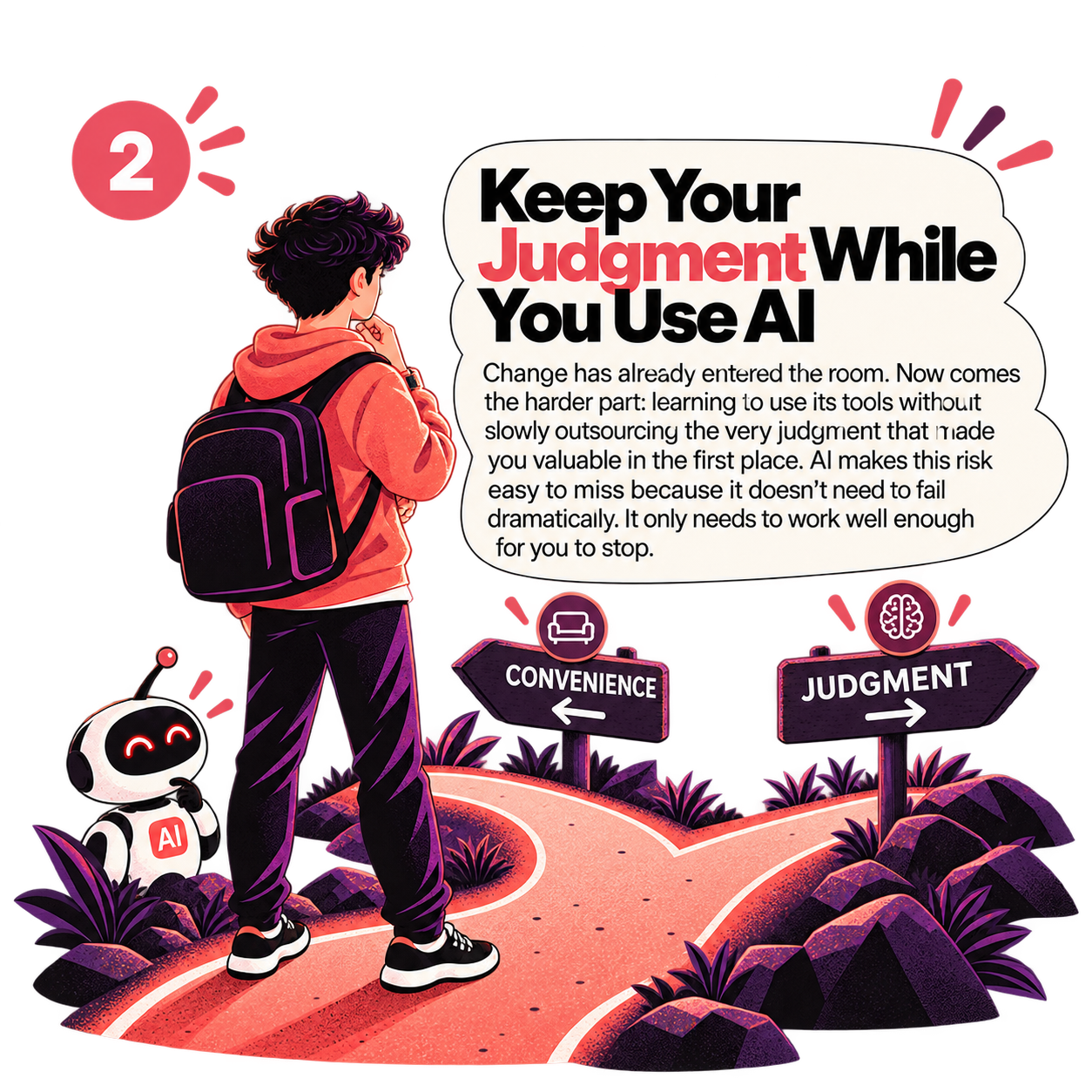
  • Keep Your Judgment While You Use AI

    Keep Your Judgment While You Use AI

    Once you’ve accepted that change has already arrived, the next question is how you use the tools inside it without quietly handing over your own thinking.

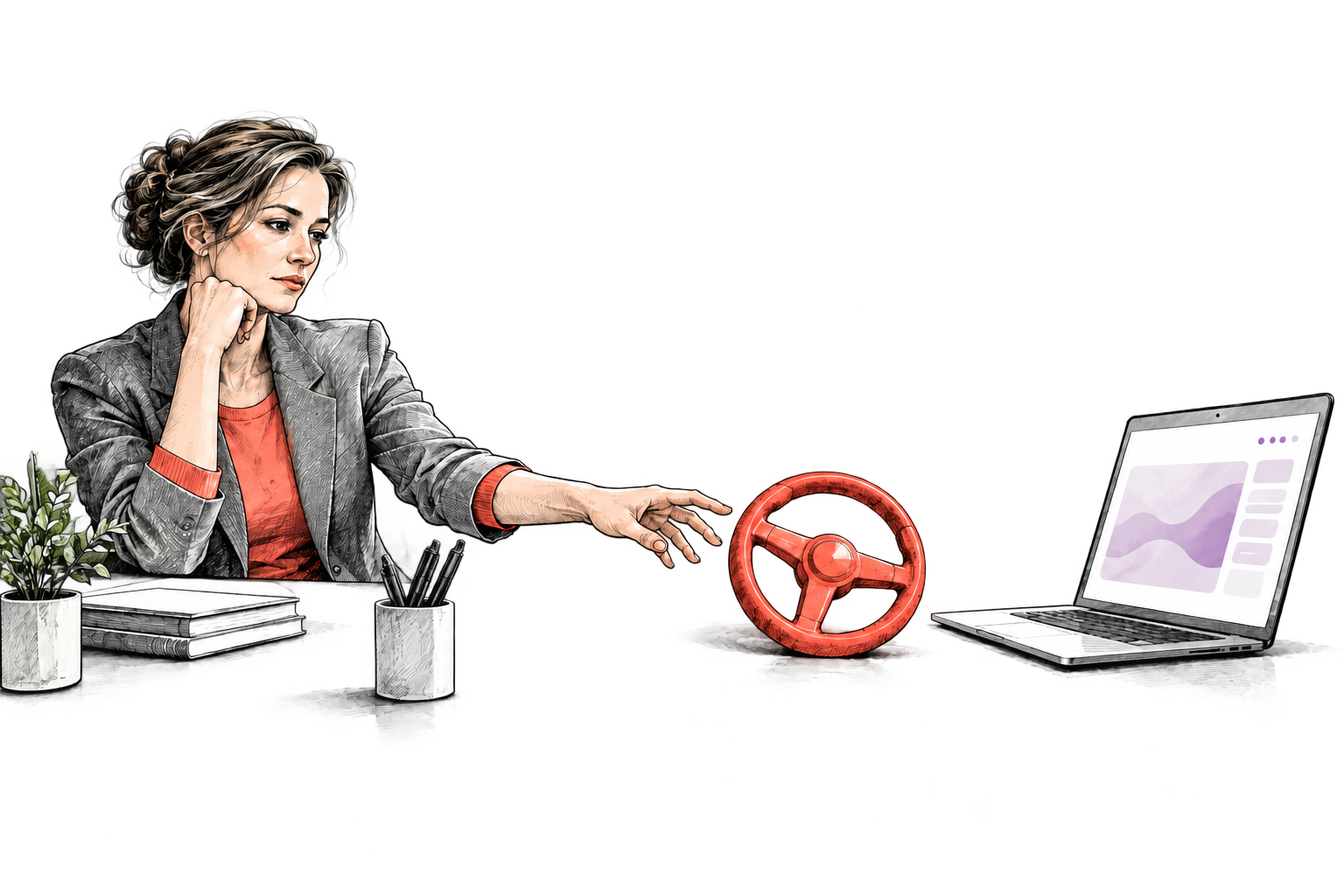
    The following article emphasises that the biggest risk with AI isn’t that it’s wrong. It’s that it’s right often enough to make you stop thinking. AI can boost your productivity.

    But your real advantage has never been speed.

    It’s judgment.

    The question isn’t how much work AI can do for you. It’s how to use it without losing the critical thinking that makes your expertise valuable.

    Why this matters

    The dangerous AI answer isn’t the obviously wrong one — it’s the one that looks completely right: clean, logical, confident, ready to paste into an email or a decision. This article names that trap directly and gives a concrete boundary: use AI as an accelerator of possibilities, not as a skilled servant.

    That distinction is the difference between a professional who gets faster and one who gets replaceable.

    Expected outcomes

    After reading and applying this, you should notice yourself pausing before copying an AI-generated answer into anything that matters; generating multiple options with AI instead of accepting the first one; and being able to explain, in your own words, why a recommendation is right — not just that AI produced it.

    Self-check

    In the last week, did I ever act on an AI output without checking it against my own experience?

    Can I currently explain the reasoning behind my last AI-assisted decision without reopening the tool?

    Do I use AI to generate options, or do I let it generate my final answer?

    Best practices

    Treat every AI answer as a first draft of thinking, not a conclusion.

    Ask for two or three alternative framings before you settle on one.

    Keep the habit of writing your reasoning down in your own words — even briefly — after using AI to explore a decision.

    Remediation

    If you notice you’ve been rubber-stamping AI output for a while: pick your next five AI-assisted tasks and force yourself to write, before accepting the answer, one reason it could be wrong.

    If you can’t come up with one, that’s the actual warning sign.

    Further reading

    A sharper look at what’s actually at stake when the handover happens gradually, by habit, not by decision.

  • More posts