
THREE DECADES INSIDE TECHNOLOGY
I’ve Seen Technology Overpromise.
And Occasionally Change Everything
I sell technology for a living. Should that disqualify me from writing honestly? Undoubtedly not.
Thirty years in, here’s what I’ve actually got. I’ve sat in boardrooms where a platform was going to transform everything by the end of the fiscal year. I’ve also stood in control rooms at three in the morning, months later, watching the same platform being nursed along by two engineers and a spreadsheet nobody had budgeted for.
Railways. Telecommunications carriers. Utilities. Public administration. Places where the network doesn’t get a vote on whether it feels like working today.
Most of what gets promised never arrives. Some of it arrives late, in a shape nobody in the original meeting would recognise. And every so often — five times in thirty years, maybe six — something turns up that genuinely changes how the work gets done, usually while everyone is busy looking at something else.
Learning to tell those three apart is the only skill I’d claim in public.
This is where I write it down.
Contact me –>
I Don’t Write About Technology From the Sidelines

I’m Giuseppe Cordone. I live in Rome. My job title is Key Account Manager at an Italian ICT system integrator, which is a polite way of saying I spend my working life on the receiving end of my own advice.
Since 1996 I’ve worked on infrastructure for organisations that can’t afford to be down. Not “would rather not be down” — genuinely can’t.
I’ve built refresh plans for thousands of devices spread along railway lines. I’ve run contract transitions where one supplier walks out on a Friday, another walks in on a Monday, and in between nothing is permitted to stop. I’ve written the technical annexes that decide who wins a public tender, and I’ve sat on the other side reading someone else’s.
I graduated in Electronic Engineering from La Sapienza. My first serious work was on Expert Systems, back when “AI” was an acronym you had to explain at dinner. I watched that field get quietly buried, then come back thirty years later louder than anyone had the imagination to predict.
So that’s the vantage point. Not an analyst’s. Not a journalist’s. Somebody who still has to be in the room on Monday when the thing he recommended goes live.
Contact me –>
WHY HITECHSTORIES EXISTS
Technology Is Rarely the Hardest Part
I’ve watched a lot of projects fail. Large ones. Expensive ones. Several with genuinely excellent technology underneath.
Almost none of them failed because of the technology.
They failed because two teams were working to different definitions of “done” and nobody noticed until integration. Because a decision that needed to be made in March was made in September, by then three other decisions had been built on top of the gap. Because the person who understood the legacy system left, and the handover was a folder. Because everyone in the room could see the plan wouldn’t survive contact with reality, and nobody in the room was in a position to say so out loud.
The technology was fine. The technology is almost always fine.
That’s the part nobody writes about, because it doesn’t demo well and it doesn’t fit in a product datasheet. It has no vendor. Nobody’s quarterly target depends on you understanding it. So it goes unwritten, and every generation of professionals pays to learn it again from scratch.
I write the other part. The decisions, the delays, the handovers, the quiet accumulation of small compromises that eventually present themselves. Not because it’s more interesting than the technology — because it’s the part that actually decides the outcome.
Contact me –>
NOT JUST WHAT WORKED
Four Times I Got It Wrong
The technology was fine. The technology is almost always fine. Here’s the proof, itemised — four decisions I made or watched get made, with the year, the reasoning at the time, and the bill that came due.
2006 — The Right Technology, the Wrong Team
GPON networks were new and genuinely promising. Building a dedicated team to take them on was the right call. The mistake was in the how: someone convinced the General Manager it would be better to staff it entirely with people from outside the existing technical organisation, leaving out everyone who already had the field experience. We paid for the learning curve twice — once in training from zero, once on mistakes the people we’d excluded would never have made.
Lesson: New technology doesn’t justify a team built from scratch. You integrate the expertise you already have. You don’t route around it.
2010 — Two Top Priorities on the Same People Make Zero Results
We launched a demanding certification programme without noticing the same people were already fully committed to a productivity-efficiency programme that left them no real time to study. The outcome was predictable, and it arrived on schedule: training fell behind, not for lack of will but for lack of hours.
Lesson: Two absolute priorities handed to the same people at the same time don’t produce two results. They produce none.
2020 — The Client Won’t Wait for You to Learn on Their Time
We took on managing a client’s digital-terrestrial transition without first investing in the expertise it required. The client noticed. They ended the contract before term.
Lesson: Experience gets built before you sign, not during delivery — especially when the client is the one paying for your apprenticeship.
2025 — A Large Contract Isn’t Revenue If You Can’t Deliver It
We accepted a complex, manageable in-maintenance project without genuinely having the skills to run it. Those skills stayed outside the company. Buying them in on short notice cost more than the contract paid, until the whole thing became unaffordable to sustain.
Lesson: A big contract signed without the right capability isn’t an opportunity. It’s a debt that arrives late.
None of these is iscdotes. They’re the reason this blog covers Digital Change, Human + AI, and Pro Growth — every pillar exists because one of these bills got paid first.
Contact me –>
FOR PEOPLE WHO HAVE TO MAKE IT WORK
Written for Who Can’t Afford to Be Naive About Technology
If you read about technology the way other people read about football — for the pleasure of having an opinion — there are better writers than me, and I’d genuinely recommend some of them.
This is for those carrbear consequences.
The engineer who has to make the migration land inside a four-hour maintenance window. The manager reading a proposal and quietly calculating who’ll be explaining it in eighteen months. The consultant who has to say the uncomfortable thing to a client who’s already committed publicly. The professional in their forties or fifties doing the arithmetic on how many more technology cycles they’ve got in them, and whether the next one is survivable.
You already know the vendor deck is optimistic. You don’t need me to tell you that. What you might need is somebody who’s been on your side of the table for thirty years and is willing to write down what actually happened.
Three threads run through everything here:

Digital Change
Why transformation programmes fail, and what the failures have in common.

Human + AI
Using the tools without outsourcing your judgement to them.

Pro Growth 
Staying relevant when the technology under your feet keeps moving.
If you’re looking for optimism about technology, there’s plenty available elsewhere. What I can offer is the version told by someone who had to sign the contract.
Contact me –>
THE RECEIPTS
Thirty Years of Experience
Compressed Into Five-Minute Reads
20,000 readers | 1,000+ articles | 1 point of view
17,000 on LinkedIn · 3,500+ subscribers to Experiential Selling in ICT and Human + AI = + Human in Substack/Linkedin · 1,500 on Medium · plus this blog.
These aren’t vanity metrics. They’re thirty years’ worth of mistakes I’ve already paid for, written down so you don’t have to buy them again at full price.
Every article here has a bill behind it somewhere. A migration that ran long. A tender I lost and spent a fortnight trying to understand—a client relationship I handled badly at thirty-two and handle differently now. The writing is just the invoice, itemised and made useful.
Twenty, 000 people read this across Medium, LinkedIn, Substack and here. That number is nice. It isn’t the one I check.
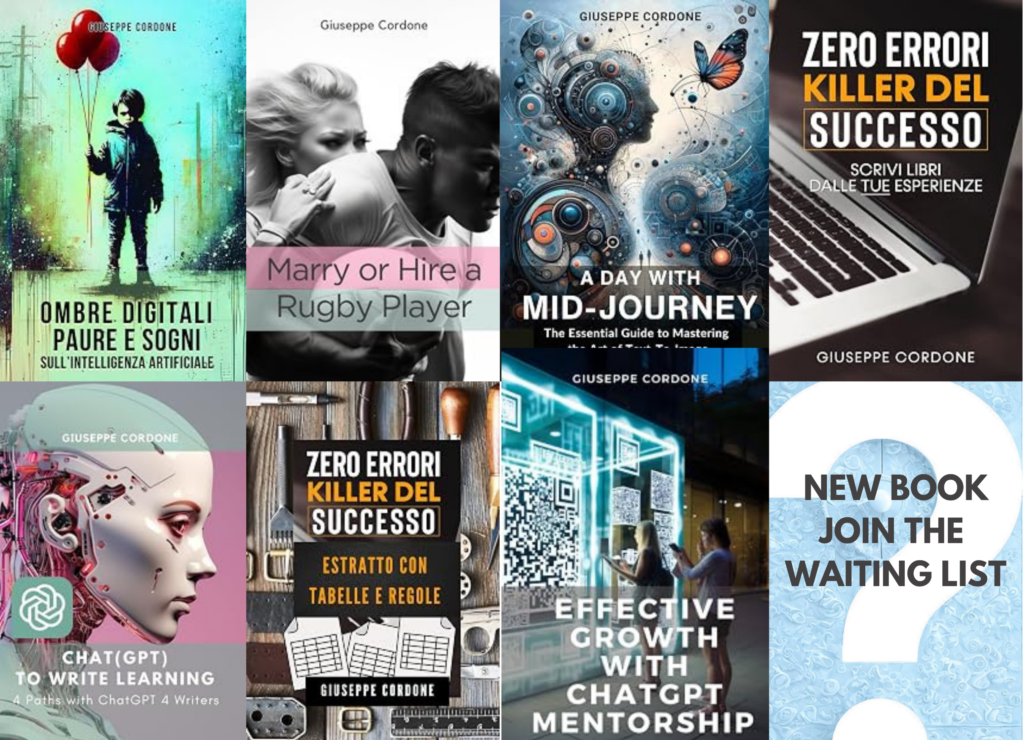
Books & GUIDES published
here details –>
The one I check is the reply that says this saved me a meeting. Or I sent this to my director, and she finally understood what I’ve been trying to say for six months. That’s the whole job. Everything else is distribution.
Newsletters:
-

1,400+ followers. The same ideas in longer form, plus a handful of publications I edit alongside my own writing, including an Experiential Selling edition over there too.
-

I believe one great idea can change the trajectory of a career. That’s why I write about technology, business, mindset, and the habits that help ordinary people do extraordinary work. Learn. Build. Share. Repeat.
-

The archive for the essays that need more room than a newsletter format allows.
Two of them live on LinkedIn as standalone newsletters.
Experiential Selling — weekly, 1,987 subscribers. Tech sales skills, self-improvement, and the growth mindset it takes to close complex B2B deals wherewith largeng commicommitteesthe sdense sheet is dense.
Human + AI = +Human — weekly, 2,671 subscribers. What changes when AI enters a decision, what it should never be allowed to take over, and how to keep your own judgement in the loop.
Medium — 1,400+ followers. The same ideas in longer form, plus a handful of publications I edit alongside my own writing, including an Experiential Selling edition over there too.
Substack — Digital Changes. The archive for the essays that need more room than a newsletter format allows.
Subscribe to either on LinkedIn — the same material also runs on Substack and Medium.
These aren’t vanity metrics. They’re thirty years’ worth of mistakes I’ve already paid for, compressed into something you can read in five minutes.
Contact me –>
BEYOND TECHNOLOGY
The Most Useful Things I’ve Learned Weren’t About Technology
I keep bonsai. Japanese bonsai and suiseki — the art of stones that look like landscapes.
It’s an absurd hobby for someone who works in a field organised entirely around acceleration. You cannot rush a tree. You can feed it, wire it, prune it, put it in better light, and it will still take as many years as it tends to, the harder you work, as many years as it tends to, the harder you work, and you don’t get a faster tree; you get a dead one. Every project manager I’ve ever met should be made to keep one for a season.
Then there’s the volunteering, which taught me that the person doing the talking is rarely the person with the information. And listening — properly listening, not waiting for a pause to say the thing I’d already decided to say. It took me twenty years to learn that, and I still catch myself getting it wrong in meetings.
And there’s my family, which has never once let me down, through a career that has occasionally deserved it less than it should have.
None of this appears on a CV. It’s the least technological thing about me, and probably the most useful.
Contact me –>
DON’T START WITH EVERYTHING
Start With One Question That Matters to You
There are over a thousand articles here. Starting at the top is a bad idea, and I won’t pretend otherwise.
Start instead with the question that’s actually bothering you right now. There are three that bring most people here:
→ Digital Transformation: why does it fail?
The failure patterns, taken apart. What goes wrong, when it goes wrong, and the warning signs that show up long before anyone admits there’s a problem.
→ How do you stay relevant in technology?
Thirty years and several complete technology cycles, written from the inside. What actually transfers between eras, and what you should stop protecting.
→ How do I use AI without losing my judgement?
The honest version. Where these tools earn their keep, where they quietly erode the thinking they’re supposed to support, and how to tell which is happening to you.
Pick one. Read three articles. If nothing there is worth your time, you’ll have lost fifteen minutes, and I’ll have deserved it.
If it is worth your time — the newsletter goes out to twenty thousand people who decided it was.
Or subscribe. One—onel. No noise, no funnel.