Sì. Lo trasformerei in un vero articolo HTS, non come critica dell’articolo originale ma come pezzo autonomo della categoria Technology Changes. Il punto centrale diventa: una tecnologia non cambia soltanto ciò che possiamo fare; cambia anche ciò che diventa scarso.
What Will Become Scarce Once Everyone Can Do It?
Technology doesn’t just solve scarcity. Sometimes it creates it.
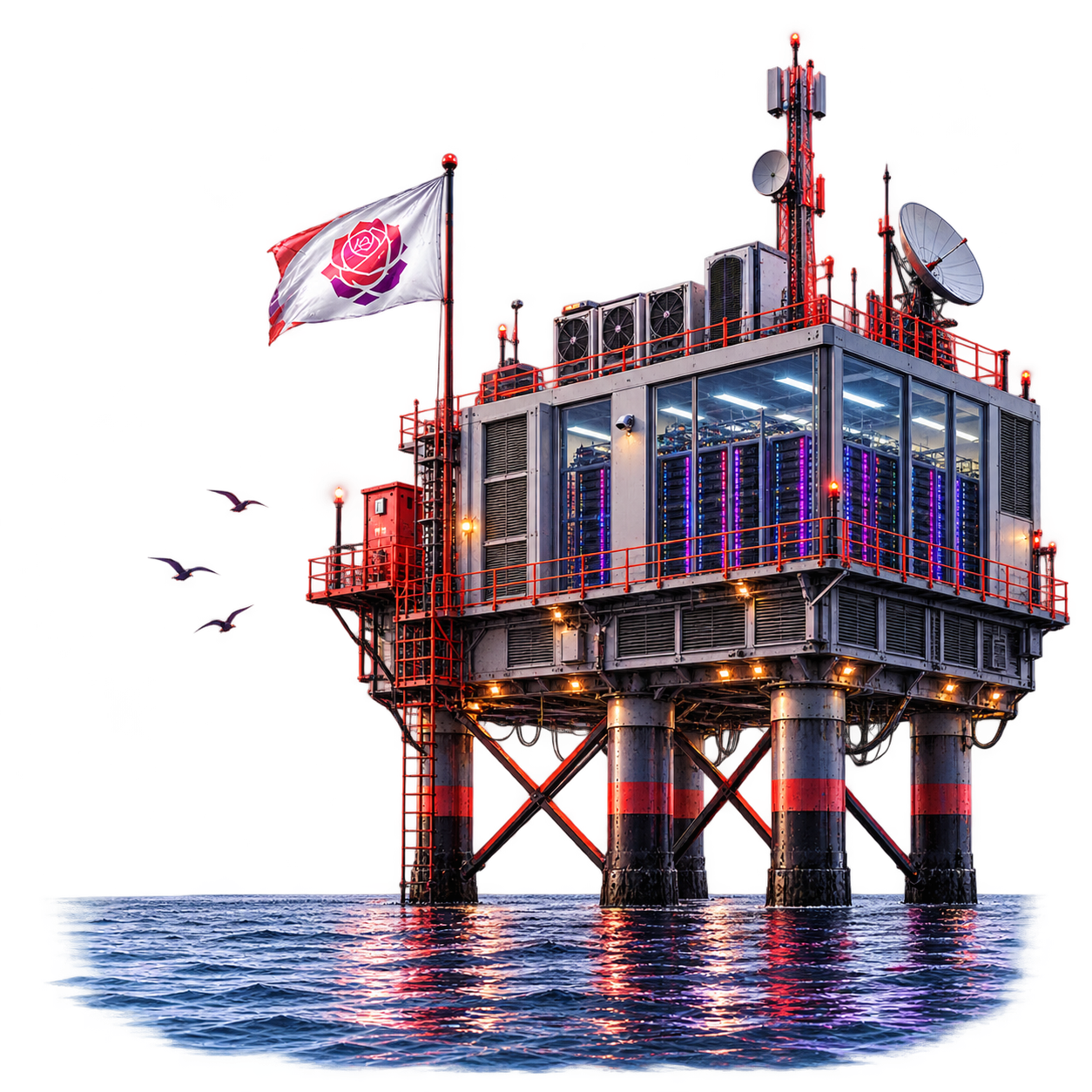
In 1968, an Italian engineer named Giorgio Rosa did something strange.
He built an artificial platform in the Adriatic Sea, off the coast of Rimini.
He called it the Rose Island.
It had a flag. A currency. Stamps. An official language.
And, briefly, an ambition to become an independent state.
The story sounds eccentric today.
But the interesting part isn’t the micronation.
It’s where Rosa built it.
Just beyond the limit of Italian territorial waters at the time.
For most people, that stretch of sea was simply empty.
For Rosa, it was usable.
That difference matters.
Because technology has a strange habit.
It turns things we barely notice into things everybody suddenly wants.
And when that happens, something we thought was abundant can become scarce remarkably quickly.
Technology changes the value of emptiness
We normally think about technology as a machine for defeating scarcity.
Computers made computation cheaper.
The internet made information abundant.
Cloud computing made infrastructure available on demand.
AI is making certain forms of cognitive work dramatically cheaper.
That’s the optimistic technology story.
And much of it is true.
But there is another side we talk about far less.
Technology can create scarcity too.
Not necessarily by destroying a resource.
By making it useful.
A resource can exist for centuries without anyone competing seriously for it.
Then technology lowers the cost of accessing it.
Its economic value rises.
People arrive.
Companies invest.
Infrastructure appears.
Competition follows.
Eventually, the resource that once looked almost unlimited begins to feel constrained.
The pattern looks something like this:
Technology → Accessibility → Value → Occupation → Scarcity → Power → Governance
And only near the end do we usually start writing the rules.
Look up
Low Earth Orbit offers an extraordinary contemporary example.
For most of human history, the space a few hundred kilometres above us had virtually no economic meaning.
Even during the first decades of the space age, reaching it was enormously expensive.
That constraint is disappearing.
Launch costs have fallen.
Satellites have become smaller.
Manufacturing has become more scalable.
Large constellations have become technically and economically possible.
And suddenly something that appeared unimaginably vast starts acquiring characteristics of a constrained resource.
But here’s where the Rose Island analogy begins to break.
And that’s where things become interesting.
Space isn’t land
Giorgio Rosa could occupy a physical location.
A satellite doesn’t simply park somewhere above Europe and own that piece of sky.
Orbital infrastructure is dynamic.
Satellites move.
Orbits intersect operationally.
Radio frequencies must be coordinated.
Collision probabilities matter.
Debris matters.
Ground infrastructure matters.
Launch capacity matters.
Replacement capacity matters.
So asking:
“Who owns the space above us?”
may actually be the wrong question.
Before discussing ownership, we should ask something much harder:
What exactly is becoming scarce?
Physical orbital space?
Specific altitude and inclination regimes?
Radio spectrum?
Collision-risk capacity?
Coordination capacity?
Launch windows?
Industrial capability?
Energy?
Capital?
The distinction isn’t academic.
Because you cannot govern a scarce resource intelligently until you understand what the scarce resource actually is.
We’ve seen this pattern before
The orbit isn’t an isolated case.
Look around.
The internet gave us almost unlimited information.
It made human attention scarce.
Cloud computing made computational infrastructure accessible at unprecedented scale.
It helped turn compute and energy into strategic resources.
Artificial intelligence is making cognitive capabilities cheaper.
At the same time, it is increasing competition for GPUs, electricity, high-quality data and perhaps even human-generated knowledge.
Satellite constellations make global connectivity increasingly accessible.
They also increase the strategic value of orbital and radio capacity.
This produces one of technology’s great paradoxes:
When technology makes one thing abundant, it can make something else scarce.
And that second-order effect can matter more than the original innovation.
Leaders usually ask the first question
Whenever a powerful technology appears, organisations understandably ask:
What will this allow us to do?
What can AI automate?
What can satellites connect?
What can cloud computing scale?
What can robots manufacture?
What can autonomous systems operate?
They’re necessary questions.
But they’re first-order questions.
There is another one that may be far more useful strategically:
What will become scarce once everyone can do it?
Imagine asking that question about the internet twenty-five years ago.
If publishing becomes almost free, what becomes scarce?
Not content.
Attention.
If computing becomes available everywhere, what becomes strategically constrained?
Not access to a server.
Increasingly, compute, chips and energy at scale.
If AI makes generating information almost effortless, what might become scarce?
Perhaps reliable knowledge.
Original evidence.
Trust.
Human expertise worth training on.
Or simply the ability to distinguish signal from an ocean of synthetic noise.
The most important consequence of a technology may therefore sit one step beyond the capability it creates.
Scarcity creates power
This is where the subject stops being merely technological.
Scarce resources produce leverage.
Whoever controls access can influence markets, organisations and sometimes governments.
That’s why tomorrow’s technology competition won’t only be about who owns the best algorithms.
It will also concern who controls the resources those technologies suddenly make valuable.
Compute.
Energy.
Data.
Spectrum.
Orbital capacity.
Infrastructure.
And perhaps resources we don’t yet consider resources at all.
That last category is the one worth watching.
Because by the time everybody agrees something has become strategically scarce, the competition for it may already be well underway.
The next scarce resource may look worthless today
That’s what I find fascinating about Rose Island.
Not the flag.
Not the stamps.
Not even the eccentric attempt to create a state in the Adriatic.
It’s the shift in perception.
Someone looked at something everybody else considered empty and thought:
I can use that.
Technology repeatedly creates that moment.
First, something appears irrelevant.
Then it becomes usable.
Then valuable.
Then contested.
Finally, regulated.
We tend to notice the transformation somewhere between valuable and contested.
Strategic thinking means noticing it earlier.
So perhaps one of the most useful questions leaders can ask about any emerging technology isn’t:
What will this make possible?
It’s the question immediately after it.
What will become scarce once everyone can do it?
Because technology doesn’t only solve scarcity.
Sometimes it tells us what we’re going to run out of next.