People ask me why I work in digital transformation, and the honest answer is uncomfortable.
I didn’t pick it.
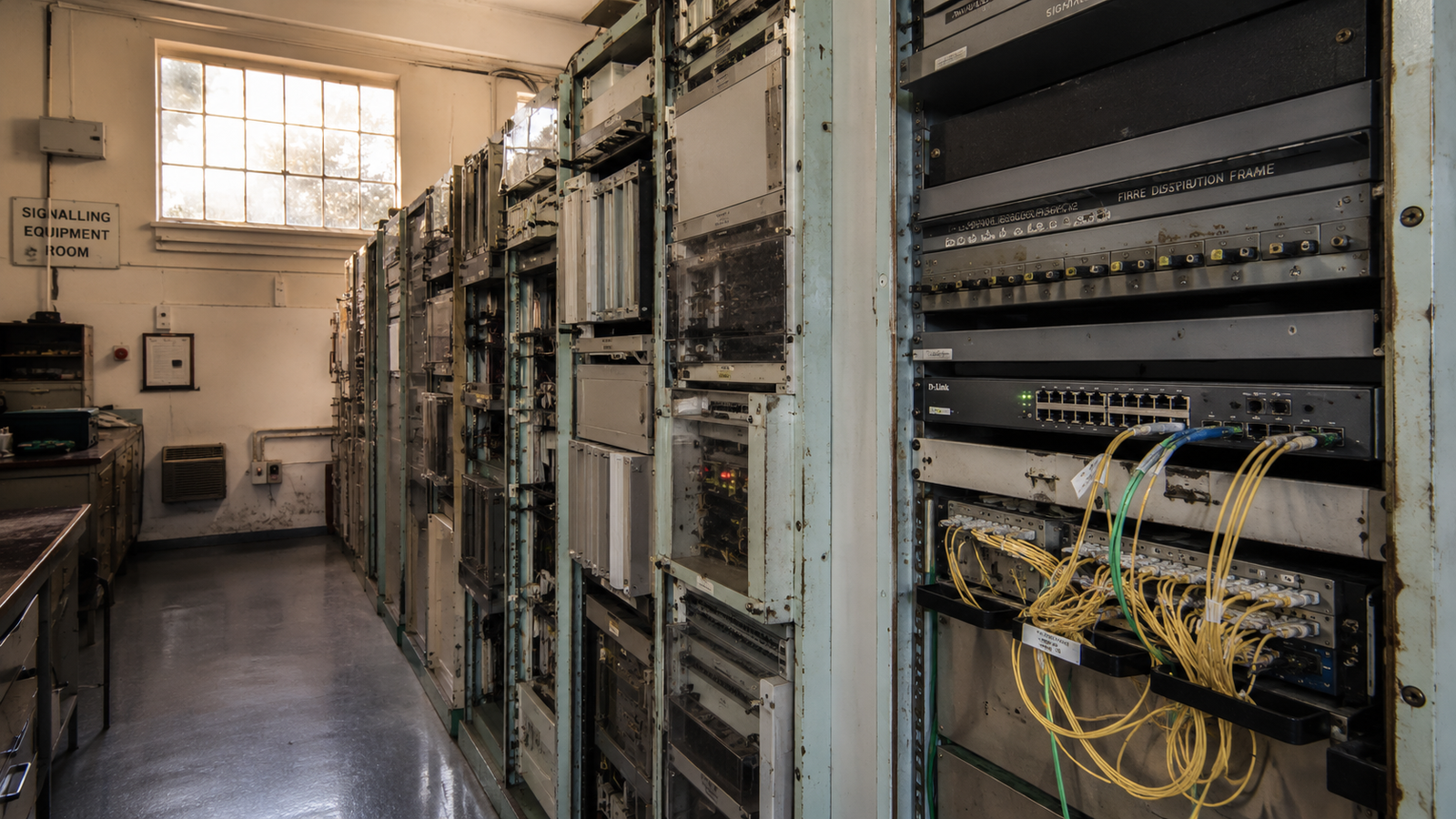
When I started, the phrase didn’t exist. There was no category, no conference track, no consultancy practice with that name on the door. There were networks that had to stay up, and there was me, twenty-something, with a degree in electronic engineering from La Sapienza and no idea what I’d walked into.
The field arrived later. It arrived exactly where I was already standing.
What the word actually named
For about fifteen years, I did work nobody called “transformation”. Migrations. Refreshes. Integrations between systems that were never designed to speak to each other. Contract transitions where one vendor left and another arrived and the network in between had to carry trains, calls, or water regardless.
Then, sometime in the 2010s, all of it got a name.
And the name attracted a crowd — strategy decks, maturity models, four-quadrant frameworks, people who could describe the destination beautifully and had never once been in a room at 3 a.m. deciding whether to roll back.
That’s when I understood what I actually had. Not a specialism. A vantage point.
I had watched the thing get named. I knew what the word was covering up.
The gap that became the work
Here’s what I repeatedly saw from inside.
The strategy was almost never wrong. The transformation programmes I watched fail didn’t fail because someone chose the wrong architecture. They failed in the space between a decision and its consequences — the eighteen months where nobody owns the outcome, the handover fortnight nobody scheduled, the end-of-support hardware everyone agreed not to raise.
Consultants who arrive at the start don’t see that space. They present, they leave, the deck gets approved.
Operators who live in that space can’t name what they’re seeing. They experience it as bad luck, or bad management, or Tuesday.
I ended up in the narrow band between the two. Long enough in operations to have felt it, close enough to procurement and vendor negotiation to see how the decision was made in the first place.
That’s not a career I designed. It’s a position I noticed I was occupying, and then took seriously.
Why I stayed when the exits were open
There were easier options. Sales, and the compensation that comes with it. Pure management, further from the systems. Or the version of this field where you never touch anything real and never get blamed when it breaks.
I stayed for one reason, and it isn’t nobility.
The problems here are unsolved.
Thirty years in, organisations still cannot answer the simplest question I can ask them: what did the delay actually cost? They can price the project. They cannot price the postponement. That gap has cost the clients I’ve worked with more than any technology decision I’ve ever watched them make.
Nobody has solved that. Not the vendors, not the big four, not the frameworks.
A field where the central problem is still open is a good place to spend a career. A field where everything works is a field that no longer needs you.
What the answer really is
So — why digital transformation?
Because I was already in critical infrastructure when the word was invented, and I stayed close enough to the systems to watch what the word left out.
Because the interesting part was never the technology. It was the eighteen months of silence between a decision and its bill.
And because I’d rather work on the part nobody has figured out than on the part that already has a framework.
That’s not a mission statement. It’s just where the work was.
.