I’ve Seen Technology Overpromise
and Occasionally Change Everything
I work in an Italian ICT system integrator, on critical infrastructure —railways, telecommunications, utilities — where the network has no say in how it feels today.
The job is to distinguish technology that never comes, technology that comes distorted, and the rare cases where it really changes the way we work.
Directly involved in a mix of critical
technologies, non-evangelist
Here you can find my vision.
No slides, no borrowed words.
Just what worked — and where it goes wrong.
Who I’m
I Don’t Write About Technology From the Sidelines

I’m Giuseppe Cordone. I live in Rome. My job title is Key Account Manager at an Italian ICT system integrator, which is a polite way of saying I spend my working life on the receiving end of my own advice.
Since 1996 I’ve worked on infrastructure for organisations that can’t afford to be down. Not “would rather not be down” — genuinely can’t.
I’ve built refresh plans for thousands of devices spread along railway lines. I’ve run contract transitions where one supplier walks out on a Friday, another walks in on a Monday, and in between nothing is permitted to stop.
I’ve written the technical annexes that decide who wins a public tender, and I’ve sat on the other side reading someone else’s.
I graduated in Electronic Engineering from La Sapienza. My first serious work was on Expert Systems, back when “AI” was an acronym you had to explain at dinner. I watched that field get quietly buried, then come back thirty years later louder than anyone had the imagination to predict.
So that’s the vantage point. Not an analyst’s. Not a journalist’s. Somebody who still has to be in the room on Monday when the thing he recommended goes live.
Contact me –>
Not Just What Worked
4 Times I’ve Been Wrong
Four decisions I wouldn’t make again — with the year, the mistake, and the bill paid.
2006
The wrong team for the right technology
For GPON networks, which were innovative at the time, I was asked to set up a team excluding those in the company who already had technical expertise. The learning curve was paid twice (or more).
The learning curve was paid twice. Existing competence complements, not overrides.
2020
The customer doesn’t wait for you to learn
Management of the transition to digital terrestrial taken over without investing in the necessary skills first. The client terminated the contract early.
Competence is built before signing, not during the execution.
2010
Two top priorities, zero results
Challenging certification path started while the same people were already absorbed in a productivity efficiency program, with no real time to train.
Two top priorities on the same people do not make two results.
2025
A big contract is not revenue
Complex maintenance project accepted without the necessary expertise.
Acquiring them in execution costs more than the contract itself, to the point of becoming uneconomical.
Without the right skills, a contract is a debt.
These four mistakes aren’t anecdotes: they’re why HiTechStories is about digital change, humans + artificial intelligence, and career growth. Each pillar arises from one of these paid accounts.
Contact me –>
numbers, not vanity
Thirty Years of Experience
Compressed Into Five-Minute Reads
20,000 readers | 1,000+ articles | 1 point of view
17,000 on LinkedIn · 3,500+ subscribers to Experiential Selling in ICT and Human + AI = + Human in Substack/Linkedin · 1,500 on Medium · plus this blog.
These aren’t vanity metrics. They’re thirty years’ worth of mistakes I’ve already paid for, written down so you don’t have to buy them again at full price.
Every article here has a bill behind it somewhere. A migration that ran long. A tender I lost and spent a fortnight trying to understand—a client relationship I handled badly at thirty-two and handle differently now. The writing is just the invoice, itemised and made useful.
Twenty, 000 people read this across Medium, LinkedIn, Substack and here. That number is nice. It isn’t the one I check.
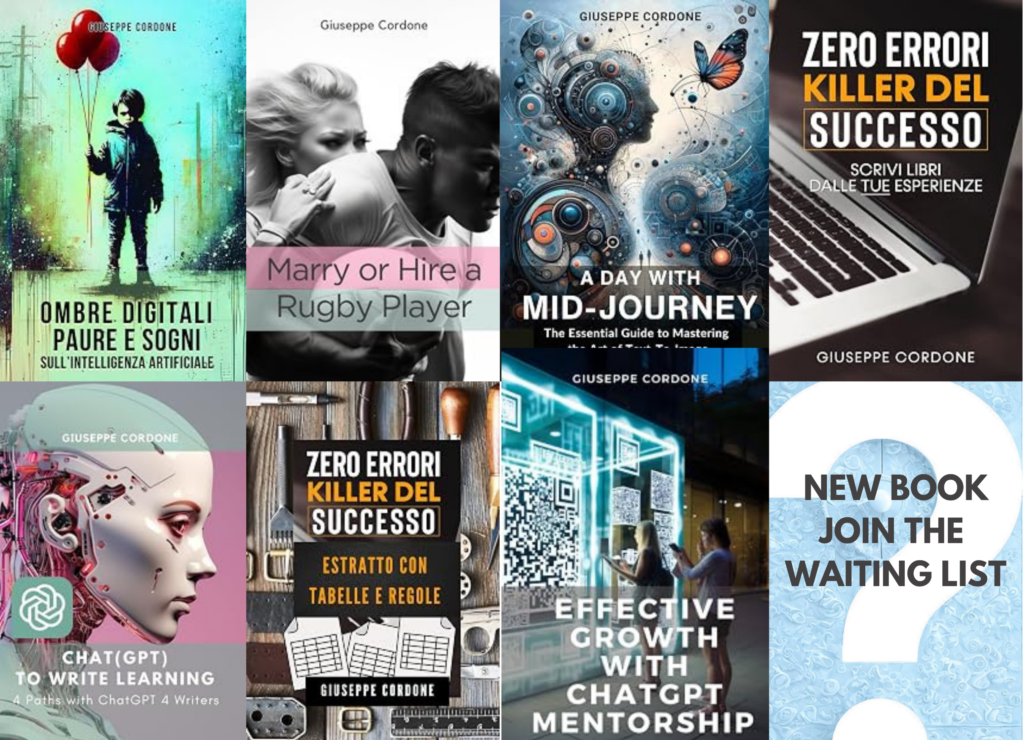
Books & GUIDES published
here details –>
The one I check is the reply that says this saved me a meeting. Or I sent this to my director, and she finally understood what I’ve been trying to say for six months. That’s the whole job. Everything else is distribution.
Other NEWSLETTERS
LinkedIn newsletters give me something a normal post cannot: continuity.
They let me go beyond the feed, build a recurring conversation with professionals who care about the same themes, and turn occasional attention into a more durable relationship.
For readers, the benefit is simple:
less noise, more depth, and a regular point of view delivered around a clear topic.
-

Experiential Selling
Weekly NewsLetter – 1,985 subscribers
At the heart of effective sales.
⚡ Tech Sales Skills
⚡ Self-Improvement
⚡ Growth Mindset
Complex B2B sales are about people making difficult decisions together.
The process must create a positive experience for every stakeholder involved.
If buying from you creates friction, confusion or fatigue, something is already wrong.
I write about tech sales, trust, growth and the mindset behind better complex deals. -

Human + AI = + Human
Weekly NewsLetter – 2,680 subscribers
Exploring collaboration between human intelligence and AI to enhance decision-making and problem-solving.
AI should amplify people, not diminish them.
This newsletter explores work, judgment, careers and professional growth in the age of AI.
The core question is simple:
How do we use better technology without outsourcing what makes us valuable? -
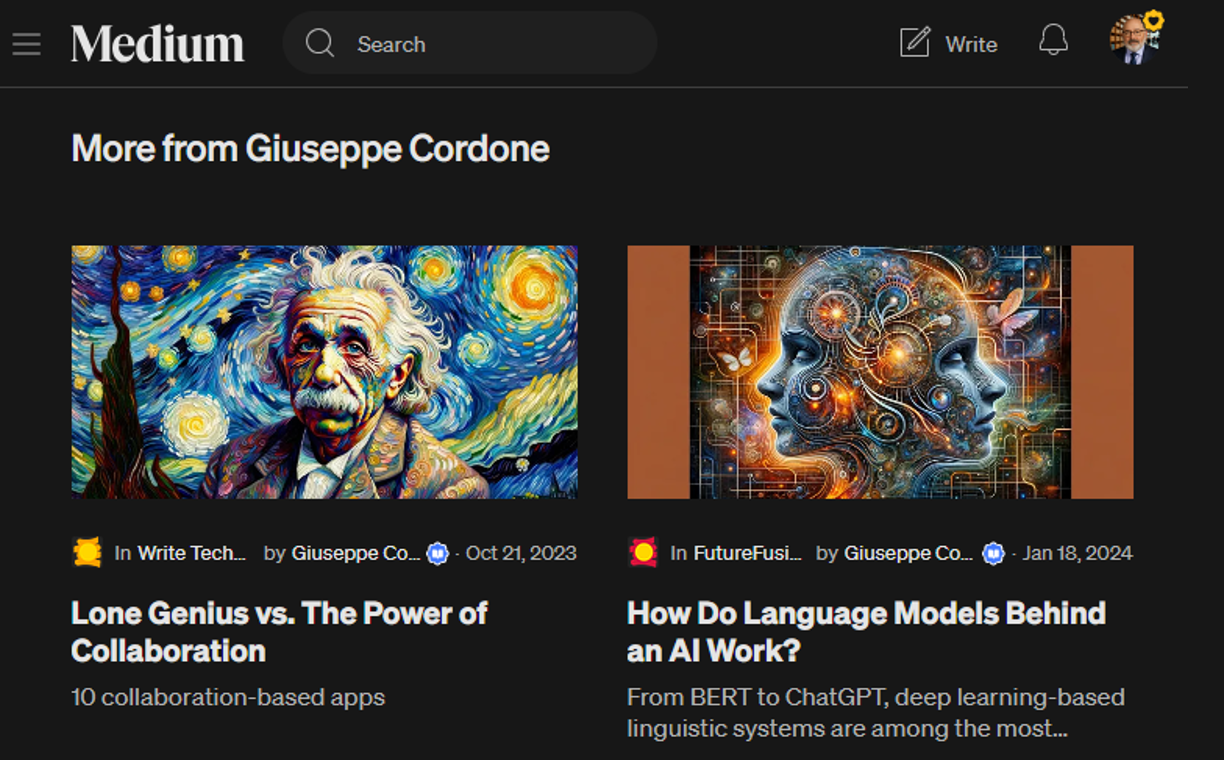
Hitechstories on
Expert in ICT, Writer, tech enthusiast in Digital Transformation and Innovation. Let’s journey! 1,480 Subscribers
I publish when an essay is ready—when the ideas have matured, the argument holds, and there’s something worth sharing.
I’m a curious observer of how technology changes our work and lives.
On this Medium blog, you’ll find technology stories, reflections on AI and digital transformation, and practical articles on career growth, leadership, and complex B2B sales. Drawing on professional experience, I explore the human side of innovation: the habits, decisions, and relationships that determine whether new tools create real value.
Expect personal stories, challenging questions, and ideas you can put into practice. -
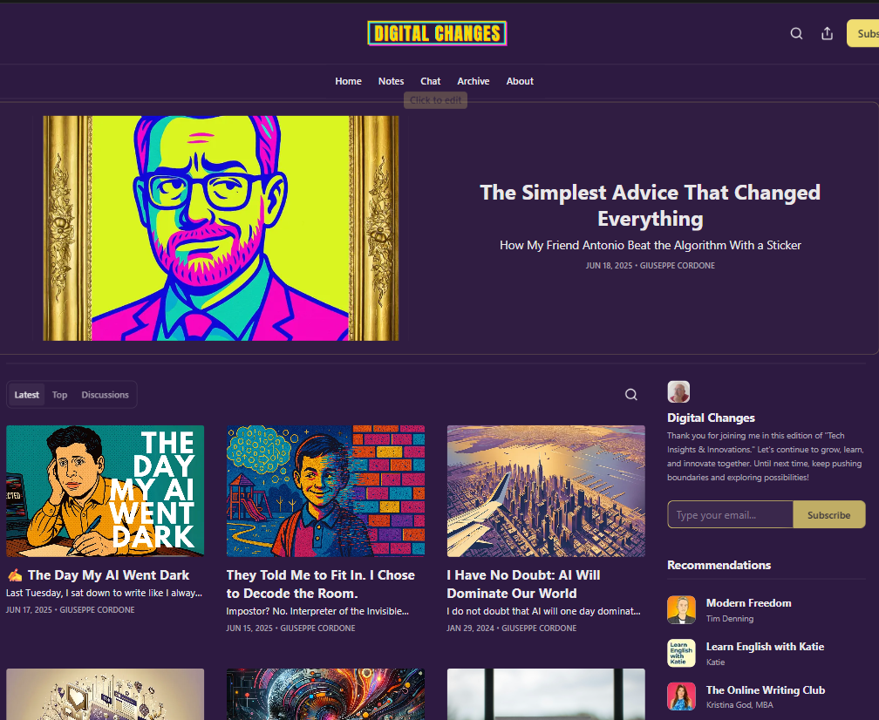
Hitechstories on
Here, I explore how technology, AI, and personal growth intersect in our working lives. Through essays and practical reflections, I connect professional experience with questions that deserve more than a quick social post.
Subscribe to receive new writing directly in your inbox, follow ideas as they develop, and join the conversation through comments and replies. If you already read me on LinkedIn or Medium, Substack offers another way to stay connected—with more room for continuity, reflection, and dialogue.
Contact me –>
BEYOND TECHNOLOGY
The Most Useful Things I’ve Learned Weren’t About Technology
I keep bonsai. Japanese bonsai and suiseki — the art of stones that look like landscapes.
It’s an absurd hobby for someone who works in a field organised entirely around acceleration. You cannot rush a tree. You can feed it, wire it, prune it, put it in better light, and it will still take as many years as it tends to, the harder you work, as many years as it tends to, the harder you work, and you don’t get a faster tree; you get a dead one. Every project manager I’ve ever met should be made to keep one for a season.
Then there’s the volunteering, which taught me that the person doing the talking is rarely the person with the information. And listening — properly listening, not waiting for a pause to say the thing I’d already decided to say. It took me twenty years to learn that, and I still catch myself getting it wrong in meetings.
And there’s my family, which has never once let me down, through a career that has occasionally deserved it less than it should have.
None of this appears on a CV. It’s the least technological thing about me, and probably the most useful.
Contact me –>
DON’T START WITH EVERYTHING
Start With One Question That Matters to You
There are hundreds articles here. Starting at the top is a bad idea, and I won’t pretend otherwise. Start instead with the question that’s actually bothering you right now. There are three that bring most people here:
→ Digital Adoption Is Not the Natural Outcome.
The failure patterns, taken apart. What goes wrong, when it goes wrong, and the warning signs that show up long before anyone admits there’s a problem.
-
Why a Digital Transformation Fail?

Digital transformation rarely fails because the technology is wrong. It fails because people, habits and organisations don’t change with it. Sponsors disappear. Training gets overlooked. Success is measured at go-live, not on Monday morning. The technology usually works.
Time to read:
2 minutes
→ Your Technology Skills Will Expire.
Your Ability to Adapt Shouldn’t.
Thirty years and several complete technology cycles, written from the inside. What actually transfers between eras, and what you should stop protecting.
-
How do you stay relevant in a tech career?

Someone younger, cheaper, and more current is already in the room. Your technical skills will eventually expire. The professionals who stay relevant aren’t always the best engineers. They’re the ones who can explain, in two minutes, “Why the technology matters”.
Time to read:
6 minutes
→ Don’t Outsource the Part of You AI Should Improve.
The honest version. Where these tools earn their keep, where they quietly erode the thinking they’re supposed to support, and how to tell which is happening to you.
-
How do you use AI without losing your judgement?
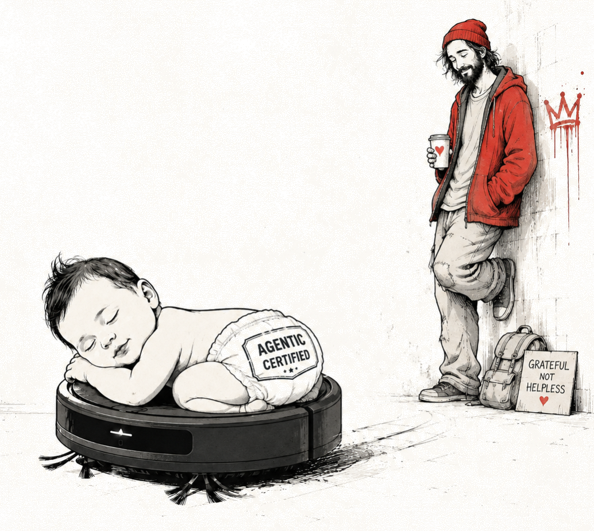
AI is powerful because it gives professionals plausible answers in seconds. That’s also the danger. The real advantage isn’t using AI faster, but knowing when to question it. Use it to generate possibilities, not decisions. AI accelerates thinking. Professional judgement decides what deserves to become reality.
Time to read:
2 minutes
Pick one. Read three articles of the same serie. If nothing there is worth your time, you’ll have lost fifteen minutes, and I’ll have deserved it.
If it is worth your time — the newsletter goes out to twenty thousand people who decided it was.
Or subscribe. One—onel. No noise, no funnel.
Contact me –>