THINK INDEPENDENTLY · HUMAN + AI
Think independently.
Decide what deserves your trust.
A confident answer can save you time. Accepting it without checking can cost you credibility.
Get perspectives that help you question AI output, recognise missing context and decide what deserves your trust.
For experienced professionals who want to use AI thoughtfully in real work.
THE RISK IS OFTEN HARD TO SPOT
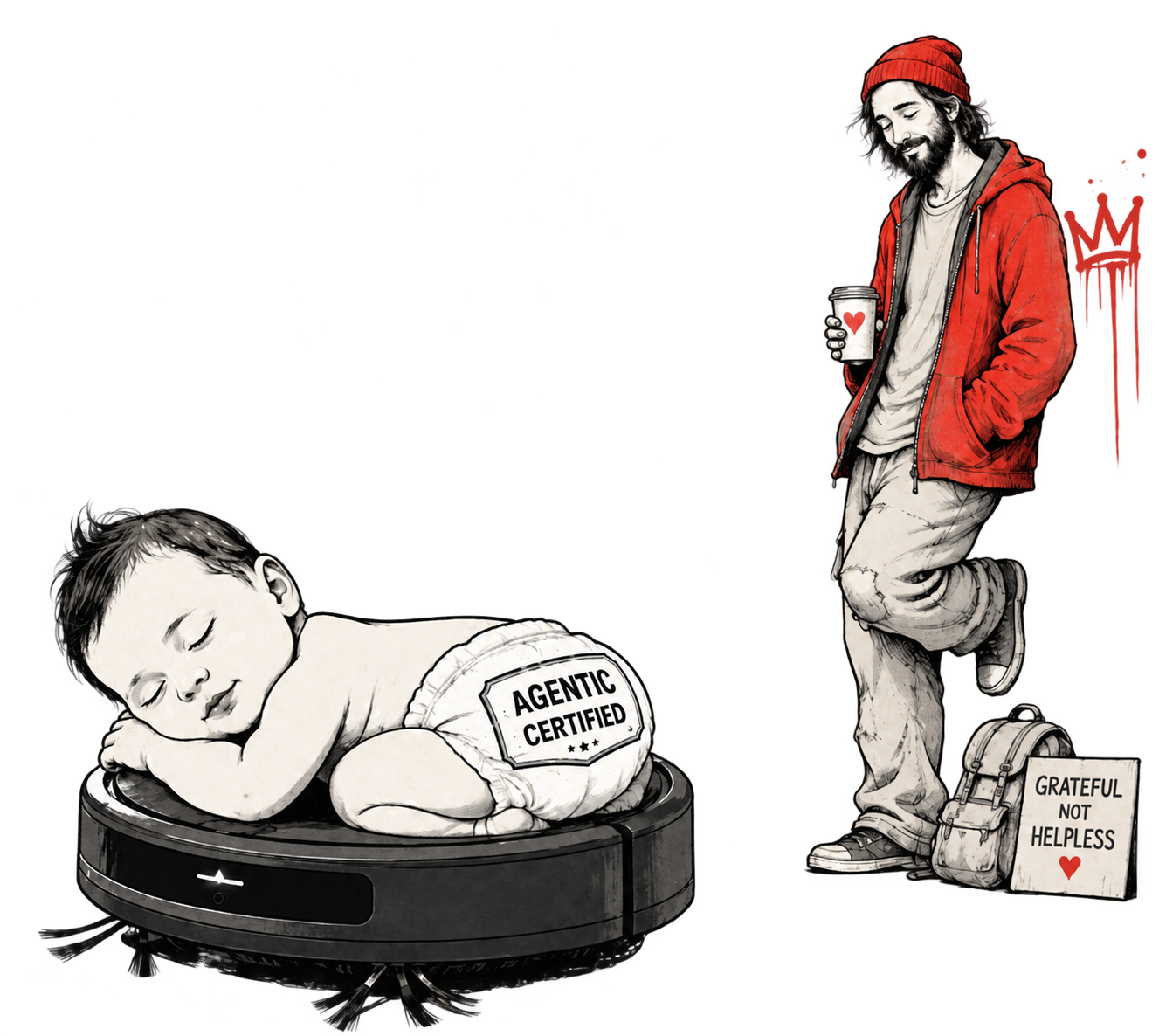
What if the answer looks right—and you stop looking?
2 min read · estimated
A mistake with your name on it
A polished proposal may contain an unsupported claim or an assumption that does not fit the client. Your name still goes on the document.
Context quietly disappears
A recommendation can sound reasonable while overlooking a relationship, constraint or operational consequence you know matters.
Your checking habit gets weaker
When the output is fast and fluent, it is tempting to stop asking how the conclusion was reached.
The response is a stronger review habit: know what to verify, what to challenge and when a decision needs more than a plausible answer.
A BETTER HABIT FOR HUMAN + AI WORK
Keep asking the questions that speed cannot answer.
What is supported?
Explore perspectives on evidence, assumptions and the difference between a fluent explanation and a dependable basis for action.
What is missing?
Consider the client, organisation, people and history that an AI response may not adequately represent.
What will I own?
Reflect on responsibility, consequences and the judgement required before turning a suggestion into action.
The HiTechStories Digest brings selected articles on technology change, AI and professional growth into your inbox. Use the reading to examine a real decision, rather than add another tool to your collection.
TRY THE THINKING BEFORE YOU SUBSCRIBE
Before you send the AI-assisted proposal, pause.
Choose one recommendation in the draft. Ask what supports it, which assumption could invalidate it and what might happen if it is wrong.
Then bring back the context: this client, this organisation, this history and these people. Decide which claim needs a source, which recommendation needs revision and which part requires your own expertise.
This is the question behind “How do you use AI without losing your judgement?”: how can AI expand the possibilities while you remain responsible for deciding what to trust?
The article is freely available. The Digest offers selected reading in your inbox; subscribing is not an exclusive-access entitlement.
EXPLORE WHAT IS AVAILABLE TODAY
Give your next question somewhere useful to go.
Bring AI into real work
Make Experience Your Advantage for perspectives on professional uses of AI and the role of human judgement.
Connect judgement to relevance
See how experience, communication and business understanding can contribute to your value as technology changes.
Build a broader perspective
Start with the guided introduction or follow a series to examine a subject beyond an isolated headline.
PLANNED NEXT · NOT YET AVAILABLE
From a useful question to a repeatable practice.
The intended direction for this site includes practical resources alongside the articles:
An AI-output review sheet
A structured prompt for checking evidence, assumptions and missing context before using a response.
Human + AI practice exercises
Small work scenarios for exploring delegation, verification and the point at which human review matters.
A decision reflection journal
A way to record what you accepted, what you challenged and what the outcome taught you.
These resources are planned, with no release date or guaranteed subscriber access announced. The Digest is where I intend to share their progress and availability.
KEEP YOUR JUDGEMENT IN THE LOOP
Let AI help with the work.
Keep thinking about what matters.
Make room for selected insights on AI at work, independent judgement and professional growth.
Practical insights. No hype. Unsubscribe anytime. Privacy policy.
New to AI? Start with the questions, then test one small use in your own work.
Already using it daily? Use the reading to challenge an established habit and look again at what you have started to accept automatically.