Blog

  • Why do old habits survive new tools?

    Why do old habits survive new tools?

    SHORT ANSWER

    A new tool arrives inside an existing way of working. If responsibilities, incentives and everyday friction stay the same, familiar habits often win. Look at where people return to the old method. That is a useful place to begin understanding what still needs to change.

    Explore Digital Changes →

    ← Browse Short Answers

    Get the Digest →

    1 min read · estimated

    Read the article →

  • Should I learn every new tool?

    Should I learn every new tool?

    SHORT ANSWER

    Choose one problem worth solving before choosing another tool. Learn enough to test it on real work, then review the result. If you cannot name what improved, reconsider the time you are investing. Your learning becomes valuable when you can apply it.

    Explore Pro Growth →

    ← Browse Short Answers

    Get the Digest →

    1 min read · estimated

    Read the article →

  • What should I let AI do?

    What should I let AI do?

    SHORT ANSWER

    Give AI a task you can describe and a result you can check. Let it organise notes, compare options or challenge a draft. Keep responsibility for the evidence, the context and the final choice. Start where you can recognise a useful answer—and spot a bad one.

    Explore Human + AI →

    ← Browse Short Answers

    Get the Digest →

    1 min read · estimated

    Read the article →

  • People Who Watch You Work Don’t Understand What You Do

    People Who Watch You Work Don’t Understand What You Do

    The other day, I was explaining my take on the difference between a farmer and a hunter in sales.

    At some point, I remembered one of the most important professional lessons I have ever learned.

    Nino taught me.

    Nino was the building caretaker’s five-year-old son. Whenever he saw me, he would ask questions that sounded simple but that I struggled to answer:

    “What do you do for work?”

    I tried to explain.

    No luck.

    A few days later, the same question.

    Until one Friday, I had what seemed like a brilliant idea:

    If I can’t explain what I do, I’ll show him.

    I took him to the office with me.

    At the time, I was running a technical sales office, constantly moving from one room to another: meetings, people, problems, discussions, decisions.

    Four hours later, we headed home.

    On the way, feeling rather pleased with myself, I asked:

    “So, Nino, do you understand what I do now?”

    “Yes.”

    He didn’t sound entirely convinced.

    But that was good enough for me.

    When we got home, his mother asked him the same question:

    “So, did you understand what Mr Giuseppe does?”

    “Yes.”

    Fortunately, she pressed him:

    “Then explain it to me. What does he do?”

    Nino thought for a moment.

    Then he delivered his verdict:

    “He tests chairs all day.”

    He was right.

    From his point of view, he had spent four hours watching me walk into an office, sit down, stand up, walk into another office and sit down again.

    I thought I had shown him my work.

    I had only shown him my movements.

    Which brings us back to the other day.

    As I talked about farmers and hunters, I thought of Nino again.

    Because we keep asking to be understood, valued and recognised for our work.

    But often, the people watching us see only our activities.

    They don’t see the problem we are solving.
    They don’t see the value we create.
    They don’t see why what we do should matter.

    This may be the main reason we should all learn how to use AI, rather than wait for others to do it for us.

    Nino’s lesson is simple:

    If people don’t understand the value of your work, you can’t expect them to recognise it—much less expect AI agents designed and built by someone else to fit the work you actually do.

    And if you can’t explain what you do through the results you produce, other people will come up with an explanation of their own.

    Sometimes it will be wrong.

    Sometimes it will be unforgiving.

    And sometimes they will simply think that…

    you test chairs all day.

    2 min read · estimated

    Read the article →

  • Why Edge Data Centres Matter in a Globally Connected World

    Why Edge Data Centres Matter in a Globally Connected World

    Understanding the Shift Toward the Edge

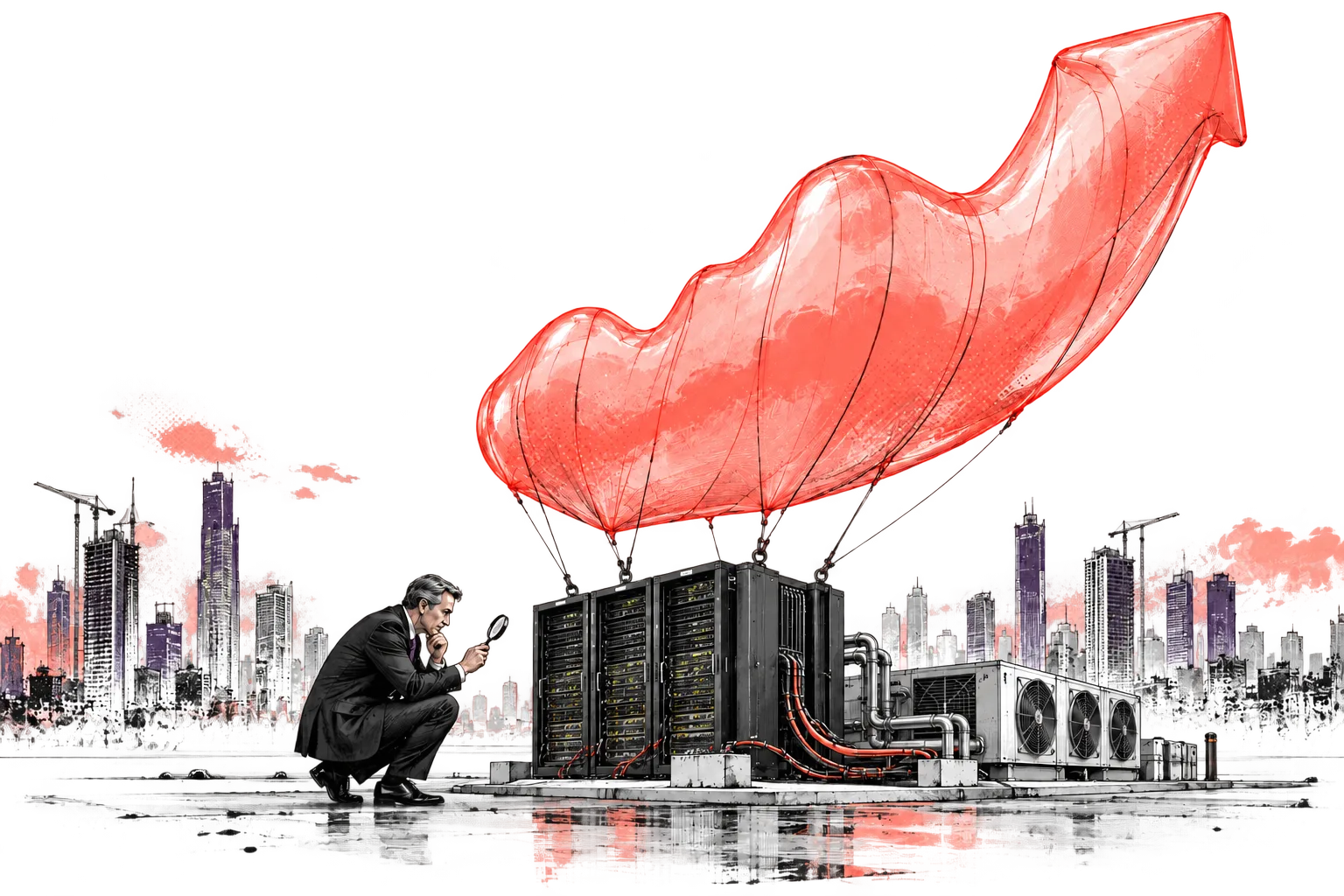
    Traditional global data centres have long supported cloud computing, enterprise applications, storage, and large-scale digital services. However, the rapid growth of connected devices, artificial intelligence, streaming, autonomous systems, and real-time analytics is changing how data must be processed. Instead of sending every request to a distant central facility, edge data centres handle information closer to the people, devices, and businesses that generate it.

    Faster Responses and Lower Latency

    The most important advantage of edge infrastructure is speed. When data travels across long distances, even highly efficient networks can introduce delays. Edge facilities reduce this distance, allowing applications to respond more quickly. This is essential for industrial automation, remote healthcare, smart transport, online gaming, and financial services, where a delay of only a few milliseconds can affect performance, safety, or customer experience.

    Improved Resilience and Efficiency

    Edge data centres can also make digital services more reliable. If a central facility or major network route experiences a problem, local processing may allow critical systems to continue operating. They can reduce pressure on long-distance networks by filtering and analysing data locally before sending only essential information to a larger data centre. This may lower bandwidth requirements and improve operational efficiency.

    Edge and Global Centres Work Together

    Edge data centres are not necessarily more important than global data centres in every situation. Large central facilities remain vital for extensive storage, complex computing, machine learning training, and coordinated global operations. The strongest model combines both approaches: edge locations manage time-sensitive workloads locally, while global centres provide scale, central control, and long-term data management. Together, they create a faster, more flexible, and resilient digital infrastructure.

    2 min read · estimated

    Read the article →

  • Microsoft

    https://lnkd.in/p/gt5f5sg7

  • SIOSK? Super Intelligence or Synthetic Knowledge

    SIOSK? Super Intelligence or Synthetic Knowledge

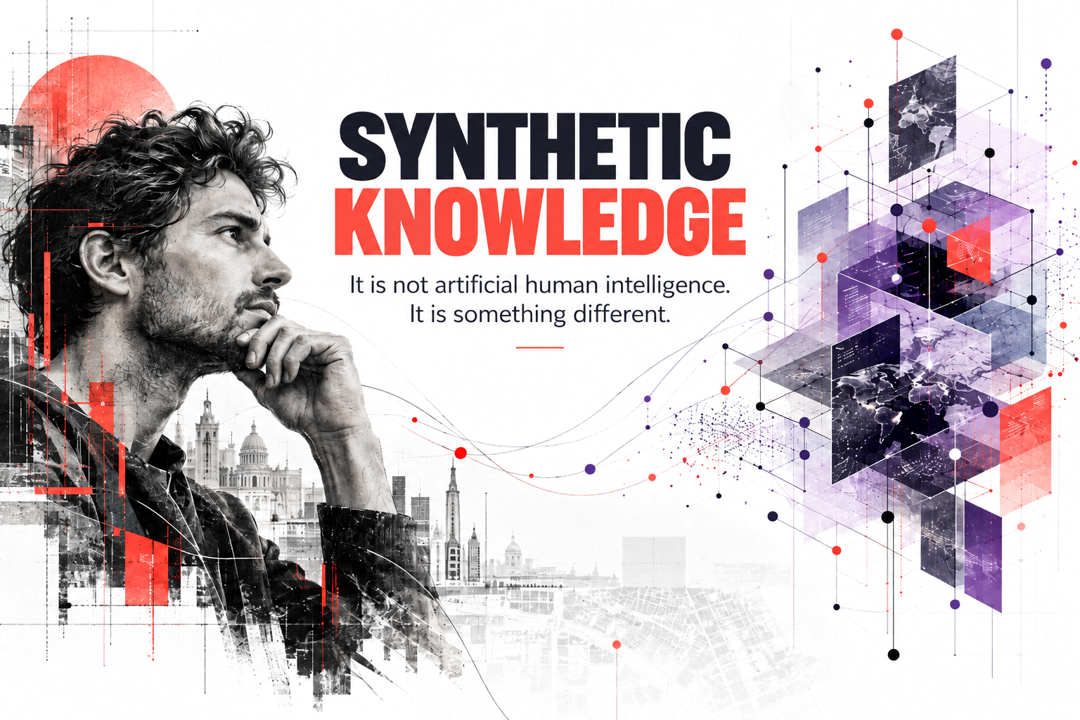
    “Artificial Intelligence” has never really convinced me as a name.

    Not now, and not back when I was an engineering student, when nobody talked about these things. If you had brought it up seriously over coffee, people would almost certainly have thought you were a bit crazy. So I kept the doubt to myself. It stayed with me anyway.

    And over the years I’ve realised the problem isn’t “Artificial”.
    It’s “Intelligence”.

    We keep talking about human intelligence and machine intelligence as if they were two versions of the same thing. They aren’t, and I’m not even sure it makes sense to compare them.

    Human intelligence comes from experience. From the body, emotions, relationships, values, memory, and a constant reading of context.
    What the machine has comes from data, computation and mathematical models, plus the ability to find correlations at a scale that is simply out of our reach.

    We live the world. The machine processes it.
    We forget, we interpret, we doubt. The machine takes in millions of pieces of information and recombines them in seconds.

    It isn’t a faster human being. It’s something else.

    That’s also why “Super Intelligence” only half works for me. “Super” implies a race, as if sooner or later we’ll have to find out who’s smarter, us or it. I think that’s the wrong question.

    If I had to choose a name, I’d call it Synthetic Knowledge.

    Synthetic because it doesn’t come from lived experience. It’s built, assembled, calculated, and then made available on demand.
    Knowledge because that’s what I find genuinely interesting: a non-human ability to gather, compress, correlate and recombine huge amounts of what we know.

    And that changes the game.

    The future won’t be a contest between human and artificial intelligence. It will be a combination: human judgment plus synthetic knowledge.

    Access to AI won’t be the advantage for long. It will become normal (at least at the levels we’ll be allowed to use).
    The real advantage will be knowing when to trust synthetic knowledge, and having enough human intelligence to contradict it when it’s wrong.

    We’ve spent a lot of time asking how intelligent AI will become.
    Maybe the better question is this one:

    How good will we need to become at governing knowledge that grows much faster than our ability to understand it?

    #ArtificialIntelligence #SyntheticKnowledge #CriticalThinking #FutureOfWork #Leadership

    2 min read · estimated

    Read the article →

  • AI Was Supposed to Be the Great Equalizer. 
It May Do the Exact Opposite.

    AI Was Supposed to Be the Great Equalizer. It May Do the Exact Opposite.

    Everyone gets the same superpower. That doesn’t mean everyone gets the same result.

    AI has been sold to us as The Great Equalizer.

    I understand why.

    A teenager with a laptop can now access capabilities that once required a company.

    A freelancer can analyze data like a small consulting team.

    A founder can create a prototype without hiring ten developers.

    A writer can research a subject in minutes.

    A salesperson can prepare for a meeting with the analytical firepower that once belonged to an entire sales operations department.

    A student can have a private tutor available at 2:17 in the morning.

    That sounds like equality.

    It may not be.

    Because we confuse equal access to intelligence with equal ability to use it.

    Those are two very different things.

    And that difference may define the next decade.

    AI lowers the floor.

    This is the part everyone can see.

    You no longer need to know how to code to create simple software.

    You don’t need to be a designer to make a decent presentation.

    You don’t need perfect English to publish in English.

    You don’t need to spend three days researching a market before walking into a meeting.

    AI removes friction.

    That is extraordinary.

    It democratizes capability.

    But something strange happens when a capability becomes universally available.

    It stops being an advantage.

    Think about calculators.

    Owning a calculator doesn’t make you a mathematician.

    Google gave billions of people access to almost unlimited information.

    It didn’t make billions of people experts.

    Social media gave everyone a publishing platform.

    It didn’t turn everyone into a great writer.

    Smartphones put a professional-quality camera in billions of pockets.

    It didn’t create billions of photographers.

    Technology repeatedly makes the tool abundant.

    Then something else becomes scarce.

    AI will be no different.

    The Great Equaliser has a nasty second act.

    Open LinkedIn.

    Scroll for five minutes.

    You can almost smell the AI.

    Perfect structure.

    Perfect grammar.

    Perfect bullet points.

    Perfect mediocrity.

    People who once struggled to write a bad post can now produce twenty average ones before breakfast.

    That’s progress of a sort.

    Coders can generate code faster.

    Marketers can create campaigns faster.

    Managers can produce reports faster.

    Students can write essays faster.

    Consultants can make slides faster.

    We are becoming incredibly efficient at producing things.

    But here’s the uncomfortable question:

    Are we becoming better at thinking?

    Because those are not the same thing.

    AI can dramatically increase output while quietly decreasing intellectual effort.

    And if we’re not careful, we’ll mistake increased production for increased capability.

    That’s dangerous.

    You can now create something that looks intelligent without doing much thinking yourself.

    The email sounds intelligent.

    The strategy document looks intelligent.

    The presentation feels intelligent.

    The code appears intelligent.

    The article reads intelligently.

    But appearance is becoming cheap.

    AI can manufacture it at an industrial scale.

    That means the market will eventually stop rewarding appearance.

    Mediocrity is about to become incredibly cheap.

    This may be one of AI’s biggest economic consequences.

    Average content is becoming nearly free.

    Average analysis is becoming nearly free.

    Average code is becoming cheaper.

    Average presentations are becoming cheaper.

    Average research is becoming cheaper.

    Average advice is becoming cheaper.

    That’s fantastic if you need average work.

    It’s brutal if you sell average work.

    The danger isn’t simply that AI will replace people.

    The more immediate danger is that AI will make huge amounts of previously valuable work indistinguishable.

    When everybody can produce a polished 1,000-word article in thirty seconds, producing 1,000 words isn’t valuable anymore.

    When everybody can create a reasonable marketing plan, the plan isn’t the differentiator.

    When everybody can generate code, typing code becomes less scarce.

    When everybody can summarise the same information, summarising information stops being impressive.

    The technology creates abundance.

    Abundance creates a new scarcity.

    That’s the part we should be obsessed with.

    When intelligence becomes abundant, judgment becomes scarce.

    This is where the Great Equaliser starts looking less equal.

    Give two people the same AI.

    One asks:

    “Write me a LinkedIn post about leadership.”

    The other asks:

    “Here are 20 customer interviews, our failed product launch, three years of sales data, my hypothesis about why customers are leaving, and the assumptions I think may be wrong. Challenge my reasoning before we decide what to do.”

    Same AI.

    Different human.

    Different outcome.

    The difference isn’t prompt engineering.

    It’s thinking.

    One person is outsourcing production.

    The other is amplifying judgment.

    That’s the divide that matters.

    AI doesn’t eliminate expertise.

    It can make expertise more leveraged.

    A mediocre strategist with AI may become faster.

    A brilliant strategist with AI can explore ten hypotheses, interrogate assumptions, simulate objections, synthesise research and test alternatives before the mediocre strategist has finished polishing the first PowerPoint slide.

    That’s not equalisation.

    That’s amplification.

    AI doesn’t just raise the floor. It blows the roof off the ceiling.

    This is the part of the conversation we’re missing.

    AI can help beginners perform tasks they couldn’t perform yesterday.

    That’s the democratizing effect.

    But AI can also give highly capable people enormous leverage.

    That’s the inequality effect.

    Give a mediocre writer AI, and they may become competent.

    Give an exceptional writer AI, and they can research faster, explore more ideas, challenge weak arguments, translate their work, repurpose it and distribute it across the world.

    Give a beginner programmer AI, and they can build a basic app.

    Give an experienced engineer AI, and they can use it across architecture, testing, debugging, documentation and experimentation while knowing when the machine is confidently wrong.

    Give an average salesperson AI, and they can generate an email.

    Give an exceptional salesperson AI, and they can analyse an account, map stakeholders, understand an industry, prepare objections, personalise a narrative and walk into the conversation better prepared than almost anyone else.

    The first person gets productivity.

    The second gets leverage.

    That’s a huge difference.

    The real divide won’t be AI users versus non-AI users.

    That distinction will disappear.

    Soon saying “I use AI” will sound as strange as saying:

    “I use the internet.”

    Of course you do.

    The interesting question will be:

    What happens to you when you use it?

    Does AI make your thinking sharper?

    Or does it save you from thinking?

    Does it expand your curiosity?

    Or give you an excuse to stop researching?

    Does it challenge your assumptions?

    Or produce elegant confirmation of whatever you already believe?

    Does it make you more capable?

    Or merely more productive?

    Does it increase your judgment?

    Or gradually make you dependent on borrowed judgment?

    These questions are harder than learning prompts.

    That’s why they matter more.

    Human × AI sounds good. But multiplication has a problem.

    There’s a popular idea emerging:

    Human × AI.

    I like it.

    But multiplication contains an uncomfortable truth.

    Anything multiplied by zero is still zero.

    Weak judgment × powerful AI doesn’t magically become wisdom.

    No curiosity × AI doesn’t produce discovery.

    No original experience × AI doesn’t produce authenticity.

    No responsibility × AI doesn’t produce leadership.

    No taste × infinite generation gives you infinite things with no idea which one matters.

    AI amplifies.

    That means it can amplify capability.

    It can also amplify stupidity.

    Bias.

    Noise.

    Bad incentives.

    Poor decisions.

    And mediocrity.

    Faster.

    That’s why the real equation we should care about may be different:

    Human + AI = +Human.

    After introducing AI, does the system have more human capability left?

    More judgment?

    More curiosity?

    More creativity?

    More autonomy?

    More ability to challenge an answer?

    More capacity to make a decision when the machine cannot?

    If the answer is no, we haven’t augmented the human.

    We’ve created dependence with a productivity dashboard attached to it.

    Access will become cheap. Agency won’t.

    This is where inequality may accelerate.

    The scarce asset won’t be access to ChatGPT, Claude, Gemini, or whatever model wins next month’s leaderboard.

    Models will improve.

    Prices will fall.

    Capabilities will spread.

    Interfaces will become invisible.

    AI will be everywhere.

    Access will become boring.

    But some people will combine AI with things that remain scarce:

    Experience.

    Reputation.

    Capital.

    Distribution.

    Customer relationships.

    Proprietary data.

    Domain knowledge.

    Taste.

    Trust.

    Networks.

    Judgment.

    Ownership.

    The ability to decide what problem is worth solving.

    AI sitting on top of those assets creates enormous leverage.

    AI without them often creates more output.

    That’s why the same technology can democratize capability while concentrating outcomes.

    It can do both at once.

    That’s the paradox.

    Don’t become digital fodder.

    There is a very tempting AI strategy right now:

    Produce more.

    More posts.

    More emails.

    More videos.

    More code.

    More presentations.

    More proposals.

    More everything.

    The machine makes production cheap, so we naturally produce more.

    But if everyone follows that strategy, we create a tsunami of synthetic abundance.

    The internet fills with acceptable things nobody asked for.

    Then attention becomes even scarcer.

    Trust becomes scarcer.

    Original thought becomes scarcer.

    Credibility becomes scarcer.

    And eventually the advantage shifts toward the people who can do something AI cannot easily manufacture:

    Know what deserves to exist in the first place.

    That requires judgment.

    You don’t need AI to replace your thinking.

    You need it to increase the surface area of your thinking.

    Use it to attack your argument.

    Ask it what you’ve missed.

    Make it find counterexamples.

    Use it to explore the option you dismissed too quickly.

    Let it expose gaps in your knowledge.

    Make it simulate the customer who hates your idea.

    Ask it to distinguish evidence from assumption.

    Then make the decision yourself.

    That’s augmentation.

    Everything else risks becoming intellectual autocomplete.

    The next digital divide will be cognitive.

    The old digital divide was largely about access.

    Who had a computer?

    Who had broadband?

    Who had cloud infrastructure?

    Who had data?

    AI changes the shape of that divide.

    Millions — eventually billions — of people may have access to similar baseline intelligence.

    That sounds wonderfully democratic.

    But equal access to a tool doesn’t produce equal outcomes.

    The next divide may be between people who use AI to avoid difficult thinking and people who use AI to go deeper into it.

    Between people who generate answers and people who formulate better questions.

    Between people who consume intelligence and people who orchestrate it.

    Between people who accept outputs and people who exercise judgment.

    Between people who rent capability from a machine and people who turn that capability into assets they own.

    The winners won’t necessarily be those with the best AI.

    They may be the people who become better humans because they have AI.

    That’s a very different race.

    AI isn’t the Great Equalizer.

    It’s the Great Amplifier.

    It lowers barriers.

    That’s real.

    It gives millions of people capabilities they never had.

    That’s worth celebrating.

    But don’t confuse democratized capability with democratized outcomes.

    The same technology that gives a beginner extraordinary new powers can give an expert extraordinary new leverage.

    The same machine that helps one person write their first line of code can help another build a company.

    The same AI that helps someone produce ten generic posts can help someone else turn thirty years of experience into an intellectual asset that reaches millions.

    The technology doesn’t decide which happens.

    We do.

    So perhaps the most important question of the AI era isn’t:

    “How powerful will AI become?”

    We already know the direction of travel.

    The better question is:

    What becomes scarce when intelligence becomes abundant?

    My bet?

    Judgment.

    Curiosity.

    Taste.

    Trust.

    Experience.

    Responsibility.

    And the ability to know when the machine is wrong.

    Those aren’t old-fashioned human skills that survived the AI revolution.

    They may become more valuable because of it.

    AI can level the playing field.

    It can also tilt it dramatically.

    The difference will increasingly come down to what you bring to the machine.

    Don’t race AI.

    Don’t surrender to it either.

    Use it to become harder to replace, not easier to imitate.

    The clock isn’t ticking because AI is coming.

    It’s ticking because everybody already has it.

    What are you becoming with yours?

    ​👉 Ready to stay ahead of the curve? Join the conversation and read the latest deep dives on hightechstories.com.

    Disclaimer: Content generated with the support of Artificial Intelligence (Gemini). The underlying ideas, analysis, and opinions are entirely human-led and reflect personal perspectives on the topic.

    #ArtificialIntelligence #AIRevolution #FutureOfWork #Leadership #TechTrends #Inequality

    10 min read · estimated

    Read the article →

  • What Will Become Scarce Once Everyone Can Do It?

    What Will Become Scarce Once Everyone Can Do It?

    Sì. Lo trasformerei in un vero articolo HTS, non come critica dell’articolo originale ma come pezzo autonomo della categoria Technology Changes. Il punto centrale diventa: una tecnologia non cambia soltanto ciò che possiamo fare; cambia anche ciò che diventa scarso.

    What Will Become Scarce Once Everyone Can Do It?

    Technology doesn’t just solve scarcity. Sometimes it creates it.

    In 1968, an Italian engineer named Giorgio Rosa did something strange.

    He built an artificial platform in the Adriatic Sea, off the coast of Rimini.

    He called it the Rose Island.

    It had a flag. A currency. Stamps. An official language.

    And, briefly, an ambition to become an independent state.

    The story sounds eccentric today.

    But the interesting part isn’t the micronation.

    It’s where Rosa built it.

    Just beyond the limit of Italian territorial waters at the time.

    For most people, that stretch of sea was simply empty.

    For Rosa, it was usable.

    That difference matters.

    Because technology has a strange habit.

    It turns things we barely notice into things everybody suddenly wants.

    And when that happens, something we thought was abundant can become scarce remarkably quickly.


    Technology changes the value of emptiness

    We normally think about technology as a machine for defeating scarcity.

    Computers made computation cheaper.

    The internet made information abundant.

    Cloud computing made infrastructure available on demand.

    AI is making certain forms of cognitive work dramatically cheaper.

    That’s the optimistic technology story.

    And much of it is true.

    But there is another side we talk about far less.

    Technology can create scarcity too.

    Not necessarily by destroying a resource.

    By making it useful.

    A resource can exist for centuries without anyone competing seriously for it.

    Then technology lowers the cost of accessing it.

    Its economic value rises.

    People arrive.

    Companies invest.

    Infrastructure appears.

    Competition follows.

    Eventually, the resource that once looked almost unlimited begins to feel constrained.

    The pattern looks something like this:

    Technology → Accessibility → Value → Occupation → Scarcity → Power → Governance

    And only near the end do we usually start writing the rules.


    Look up

    Low Earth Orbit offers an extraordinary contemporary example.

    For most of human history, the space a few hundred kilometres above us had virtually no economic meaning.

    Even during the first decades of the space age, reaching it was enormously expensive.

    That constraint is disappearing.

    Launch costs have fallen.

    Satellites have become smaller.

    Manufacturing has become more scalable.

    Large constellations have become technically and economically possible.

    And suddenly something that appeared unimaginably vast starts acquiring characteristics of a constrained resource.

    But here’s where the Rose Island analogy begins to break.

    And that’s where things become interesting.


    Space isn’t land

    Giorgio Rosa could occupy a physical location.

    A satellite doesn’t simply park somewhere above Europe and own that piece of sky.

    Orbital infrastructure is dynamic.

    Satellites move.

    Orbits intersect operationally.

    Radio frequencies must be coordinated.

    Collision probabilities matter.

    Debris matters.

    Ground infrastructure matters.

    Launch capacity matters.

    Replacement capacity matters.

    So asking:

    “Who owns the space above us?”

    may actually be the wrong question.

    Before discussing ownership, we should ask something much harder:

    What exactly is becoming scarce?

    Physical orbital space?

    Specific altitude and inclination regimes?

    Radio spectrum?

    Collision-risk capacity?

    Coordination capacity?

    Launch windows?

    Industrial capability?

    Energy?

    Capital?

    The distinction isn’t academic.

    Because you cannot govern a scarce resource intelligently until you understand what the scarce resource actually is.


    We’ve seen this pattern before

    The orbit isn’t an isolated case.

    Look around.

    The internet gave us almost unlimited information.

    It made human attention scarce.

    Cloud computing made computational infrastructure accessible at unprecedented scale.

    It helped turn compute and energy into strategic resources.

    Artificial intelligence is making cognitive capabilities cheaper.

    At the same time, it is increasing competition for GPUs, electricity, high-quality data and perhaps even human-generated knowledge.

    Satellite constellations make global connectivity increasingly accessible.

    They also increase the strategic value of orbital and radio capacity.

    This produces one of technology’s great paradoxes:

    When technology makes one thing abundant, it can make something else scarce.

    And that second-order effect can matter more than the original innovation.


    Leaders usually ask the first question

    Whenever a powerful technology appears, organisations understandably ask:

    What will this allow us to do?

    What can AI automate?

    What can satellites connect?

    What can cloud computing scale?

    What can robots manufacture?

    What can autonomous systems operate?

    They’re necessary questions.

    But they’re first-order questions.

    There is another one that may be far more useful strategically:

    What will become scarce once everyone can do it?

    Imagine asking that question about the internet twenty-five years ago.

    If publishing becomes almost free, what becomes scarce?

    Not content.

    Attention.

    If computing becomes available everywhere, what becomes strategically constrained?

    Not access to a server.

    Increasingly, compute, chips and energy at scale.

    If AI makes generating information almost effortless, what might become scarce?

    Perhaps reliable knowledge.

    Original evidence.

    Trust.

    Human expertise worth training on.

    Or simply the ability to distinguish signal from an ocean of synthetic noise.

    The most important consequence of a technology may therefore sit one step beyond the capability it creates.


    Scarcity creates power

    This is where the subject stops being merely technological.

    Scarce resources produce leverage.

    Whoever controls access can influence markets, organisations and sometimes governments.

    That’s why tomorrow’s technology competition won’t only be about who owns the best algorithms.

    It will also concern who controls the resources those technologies suddenly make valuable.

    Compute.

    Energy.

    Data.

    Spectrum.

    Orbital capacity.

    Infrastructure.

    And perhaps resources we don’t yet consider resources at all.

    That last category is the one worth watching.

    Because by the time everybody agrees something has become strategically scarce, the competition for it may already be well underway.


    The next scarce resource may look worthless today

    That’s what I find fascinating about Rose Island.

    Not the flag.

    Not the stamps.

    Not even the eccentric attempt to create a state in the Adriatic.

    It’s the shift in perception.

    Someone looked at something everybody else considered empty and thought:

    I can use that.

    Technology repeatedly creates that moment.

    First, something appears irrelevant.

    Then it becomes usable.

    Then valuable.

    Then contested.

    Finally, regulated.

    We tend to notice the transformation somewhere between valuable and contested.

    Strategic thinking means noticing it earlier.

    So perhaps one of the most useful questions leaders can ask about any emerging technology isn’t:

    What will this make possible?

    It’s the question immediately after it.

    What will become scarce once everyone can do it?

    Because technology doesn’t only solve scarcity.

    Sometimes it tells us what we’re going to run out of next.

    5 min read · estimated

    Read the article →