Month: October 2026

  • Why do old habits survive new tools?

    Why do old habits survive new tools?

    SHORT ANSWER

    A new tool arrives inside an existing way of working. If responsibilities, incentives and everyday friction stay the same, familiar habits often win. Look at where people return to the old method. That is a useful place to begin understanding what still needs to change.

    Explore Digital Changes →

    ← Browse Short Answers

    Get the Digest →

    1 min read · estimated

    Read the article →

  • Should I learn every new tool?

    Should I learn every new tool?

    SHORT ANSWER

    Choose one problem worth solving before choosing another tool. Learn enough to test it on real work, then review the result. If you cannot name what improved, reconsider the time you are investing. Your learning becomes valuable when you can apply it.

    Explore Pro Growth →

    ← Browse Short Answers

    Get the Digest →

    1 min read · estimated

    Read the article →

  • What should I let AI do?

    What should I let AI do?

    SHORT ANSWER

    Give AI a task you can describe and a result you can check. Let it organise notes, compare options or challenge a draft. Keep responsibility for the evidence, the context and the final choice. Start where you can recognise a useful answer—and spot a bad one.

    Explore Human + AI →

    ← Browse Short Answers

    Get the Digest →

    1 min read · estimated

    Read the article →

  • People Who Watch You Work Don’t Understand What You Do

    People Who Watch You Work Don’t Understand What You Do

    The other day, I was explaining my take on the difference between a farmer and a hunter in sales.

    At some point, I remembered one of the most important professional lessons I have ever learned.

    Nino taught me.

    Nino was the building caretaker’s five-year-old son. Whenever he saw me, he would ask questions that sounded simple but that I struggled to answer:

    “What do you do for work?”

    I tried to explain.

    No luck.

    A few days later, the same question.

    Until one Friday, I had what seemed like a brilliant idea:

    If I can’t explain what I do, I’ll show him.

    I took him to the office with me.

    At the time, I was running a technical sales office, constantly moving from one room to another: meetings, people, problems, discussions, decisions.

    Four hours later, we headed home.

    On the way, feeling rather pleased with myself, I asked:

    “So, Nino, do you understand what I do now?”

    “Yes.”

    He didn’t sound entirely convinced.

    But that was good enough for me.

    When we got home, his mother asked him the same question:

    “So, did you understand what Mr Giuseppe does?”

    “Yes.”

    Fortunately, she pressed him:

    “Then explain it to me. What does he do?”

    Nino thought for a moment.

    Then he delivered his verdict:

    “He tests chairs all day.”

    He was right.

    From his point of view, he had spent four hours watching me walk into an office, sit down, stand up, walk into another office and sit down again.

    I thought I had shown him my work.

    I had only shown him my movements.

    Which brings us back to the other day.

    As I talked about farmers and hunters, I thought of Nino again.

    Because we keep asking to be understood, valued and recognised for our work.

    But often, the people watching us see only our activities.

    They don’t see the problem we are solving.
    They don’t see the value we create.
    They don’t see why what we do should matter.

    This may be the main reason we should all learn how to use AI, rather than wait for others to do it for us.

    Nino’s lesson is simple:

    If people don’t understand the value of your work, you can’t expect them to recognise it—much less expect AI agents designed and built by someone else to fit the work you actually do.

    And if you can’t explain what you do through the results you produce, other people will come up with an explanation of their own.

    Sometimes it will be wrong.

    Sometimes it will be unforgiving.

    And sometimes they will simply think that…

    you test chairs all day.

    2 min read · estimated

    Read the article →

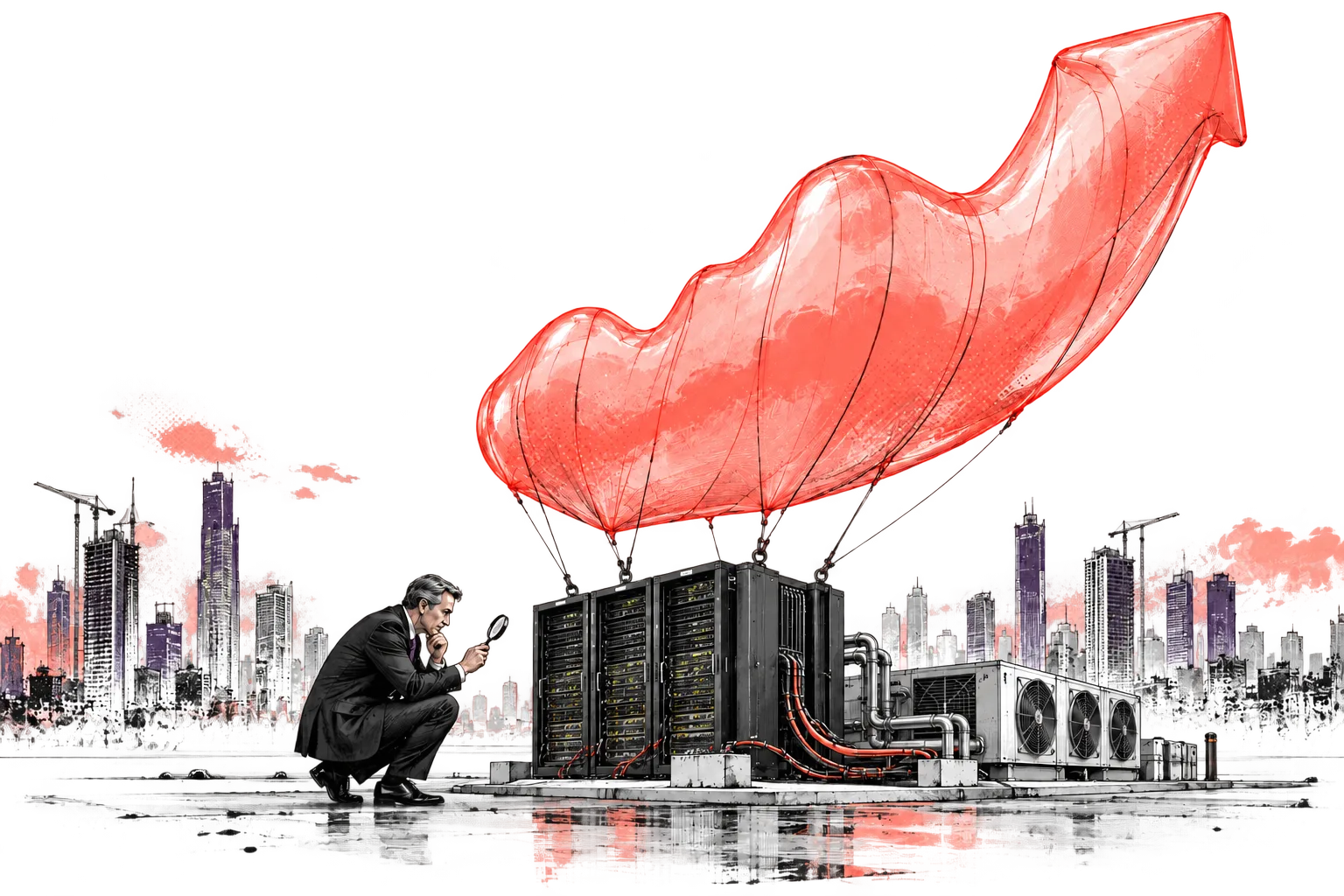
  • Why Edge Data Centres Matter in a Globally Connected World

    Why Edge Data Centres Matter in a Globally Connected World

    Understanding the Shift Toward the Edge

    Traditional global data centres have long supported cloud computing, enterprise applications, storage, and large-scale digital services. However, the rapid growth of connected devices, artificial intelligence, streaming, autonomous systems, and real-time analytics is changing how data must be processed. Instead of sending every request to a distant central facility, edge data centres handle information closer to the people, devices, and businesses that generate it.

    Faster Responses and Lower Latency

    The most important advantage of edge infrastructure is speed. When data travels across long distances, even highly efficient networks can introduce delays. Edge facilities reduce this distance, allowing applications to respond more quickly. This is essential for industrial automation, remote healthcare, smart transport, online gaming, and financial services, where a delay of only a few milliseconds can affect performance, safety, or customer experience.

    Improved Resilience and Efficiency

    Edge data centres can also make digital services more reliable. If a central facility or major network route experiences a problem, local processing may allow critical systems to continue operating. They can reduce pressure on long-distance networks by filtering and analysing data locally before sending only essential information to a larger data centre. This may lower bandwidth requirements and improve operational efficiency.

    Edge and Global Centres Work Together

    Edge data centres are not necessarily more important than global data centres in every situation. Large central facilities remain vital for extensive storage, complex computing, machine learning training, and coordinated global operations. The strongest model combines both approaches: edge locations manage time-sensitive workloads locally, while global centres provide scale, central control, and long-term data management. Together, they create a faster, more flexible, and resilient digital infrastructure.

    2 min read · estimated

    Read the article →

  • Microsoft

    https://lnkd.in/p/gt5f5sg7

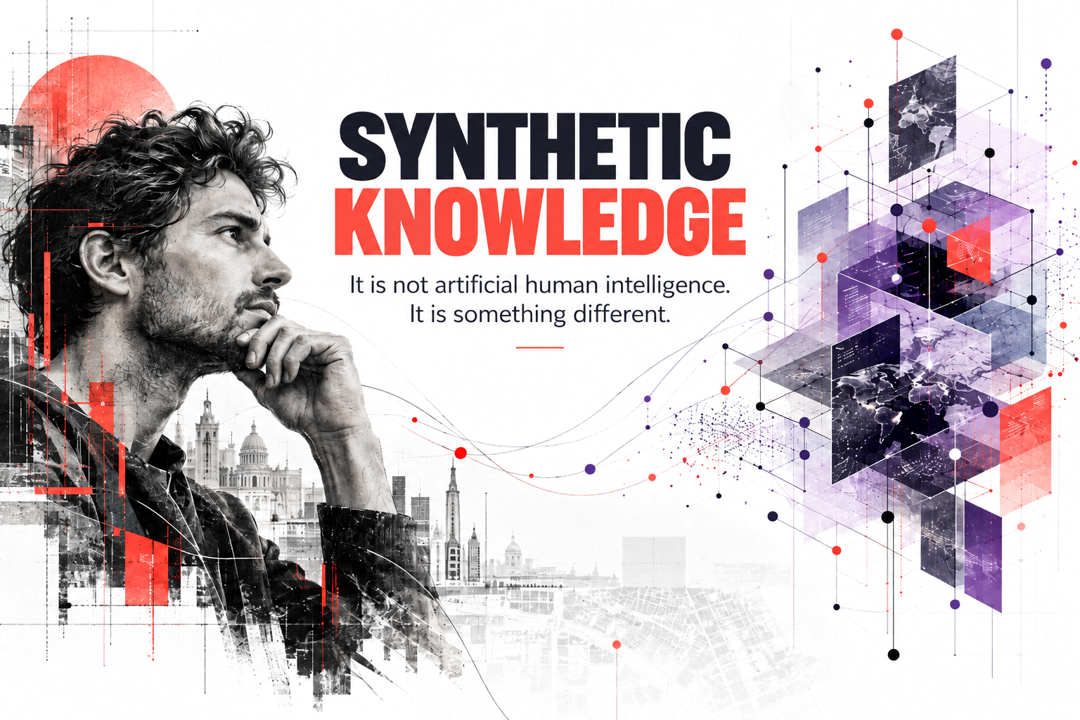
  • SIOSK? Super Intelligence or Synthetic Knowledge

    SIOSK? Super Intelligence or Synthetic Knowledge

    “Artificial Intelligence” has never really convinced me as a name.

    Not now, and not back when I was an engineering student, when nobody talked about these things. If you had brought it up seriously over coffee, people would almost certainly have thought you were a bit crazy. So I kept the doubt to myself. It stayed with me anyway.

    And over the years I’ve realised the problem isn’t “Artificial”.
    It’s “Intelligence”.

    We keep talking about human intelligence and machine intelligence as if they were two versions of the same thing. They aren’t, and I’m not even sure it makes sense to compare them.

    Human intelligence comes from experience. From the body, emotions, relationships, values, memory, and a constant reading of context.
    What the machine has comes from data, computation and mathematical models, plus the ability to find correlations at a scale that is simply out of our reach.

    We live the world. The machine processes it.
    We forget, we interpret, we doubt. The machine takes in millions of pieces of information and recombines them in seconds.

    It isn’t a faster human being. It’s something else.

    That’s also why “Super Intelligence” only half works for me. “Super” implies a race, as if sooner or later we’ll have to find out who’s smarter, us or it. I think that’s the wrong question.

    If I had to choose a name, I’d call it Synthetic Knowledge.

    Synthetic because it doesn’t come from lived experience. It’s built, assembled, calculated, and then made available on demand.
    Knowledge because that’s what I find genuinely interesting: a non-human ability to gather, compress, correlate and recombine huge amounts of what we know.

    And that changes the game.

    The future won’t be a contest between human and artificial intelligence. It will be a combination: human judgment plus synthetic knowledge.

    Access to AI won’t be the advantage for long. It will become normal (at least at the levels we’ll be allowed to use).
    The real advantage will be knowing when to trust synthetic knowledge, and having enough human intelligence to contradict it when it’s wrong.

    We’ve spent a lot of time asking how intelligent AI will become.
    Maybe the better question is this one:

    How good will we need to become at governing knowledge that grows much faster than our ability to understand it?

    #ArtificialIntelligence #SyntheticKnowledge #CriticalThinking #FutureOfWork #Leadership

    2 min read · estimated

    Read the article →